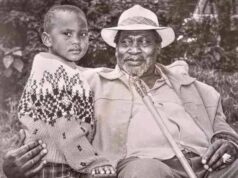
It was supposed to be an ordinary lunch outing at the Coast. Instead, it reportedly turned into one of the most amusing stories associated with Kenya’s founding President, Jomo Kenyatta, and his wife, Mama Ngina Kenyatta.
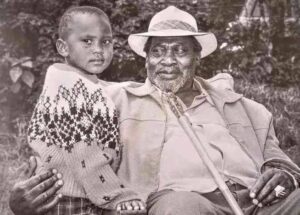
The remarkable incident was later recalled by Eliud Mahihu, who served as a Provincial Commissioner during Kenyatta’s administration.
According to Mahihu’s account, he was accompanying President Kenyatta during one of his visits to the Coast when they stopped at a beach hotel for lunch.
While at the hotel, Kenyatta reportedly noticed a vacant and undeveloped piece of land nearby.
The former president became interested in the property and asked Mahihu to find out who owned it.
His instructions were reportedly straightforward: establish the identity of the owner and tell them that he was willing to purchase the property for twice its market value.
Mahihu subsequently set out to establish who owned the attractive piece of land.
The following day, he returned with the answer.
He reportedly told Kenyatta that he had managed to identify the owner but there was a problem—the owner was not interested in selling.
Kenyatta, according to Mahihu’s recollection, was not ready to give up easily.
He reportedly asked to meet the landowner personally, apparently hoping that he could persuade the owner to reconsider the decision.
That was when the story took an unexpected turn.
Mahihu reportedly pointed out that there was no need to search for the landowner because the person was already sitting beside the president.
The land, he revealed, belonged to Mama Ngina Kenyatta.
The revelation reportedly caught Kenyatta by surprise and sent him into laughter.
According to Mahihu’s account, Kenyatta then made a light-hearted remark about the freedom that allowed women to own property without their husbands necessarily knowing about it.
The anecdote, published by Kenyan media years later, offers a fascinating glimpse into the personal moments surrounding Kenyatta’s interest in property at the Coast.
But the Coast story was reportedly not the only memorable encounter involving Kenyatta and land.
Mahihu also recalled an incident involving a prime piece of property in Nakuru.
According to the account, another provincial commissioner, Isaiah Mathenge, showed Kenyatta a strategically located plot along a major street and asked whether the president would be interested in acquiring a similar property.
Kenyatta’s response, as recalled in the published account, was reportedly immediate—he expressed interest in taking the particular plot that had been shown to him while suggesting that another one could be found for Mathenge.
These stories emerged against the backdrop of Kenyatta-era government involvement in the acquisition and transfer of beach plots, an issue that has subsequently attracted considerable historical and political scrutiny. Business Daily’s reporting on the period documented extensive dealings involving coastal properties and senior officials.
The story of the beach plot, however, remains particularly memorable because of its unexpected ending.
What began with a president spotting an undeveloped piece of prime coastal land and offering to pay double its market value reportedly ended with the amusing discovery that the person he was negotiating to buy from was his own wife, seated right beside him.
It is a small but memorable anecdote from Kenya’s early post-independence history—one that combines power, property, family and an unexpected moment of humour.