A tragic story of domestic violence, fear and survival ended with an extraordinary court decision after a woman who killed her husband was sentenced to only one day in custody following a finding that she had acted in self-defence.
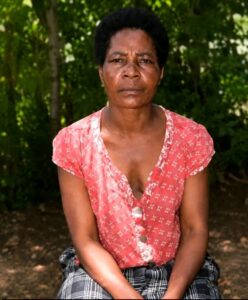

The case was initially treated as a murder matter at the High Court in Siaya, but the prosecution later entered into a plea bargain that reduced the charge to manslaughter.
The woman, Aswani, admitted that she had killed her husband, Obochi, but maintained that she did so while desperately trying to protect herself from an attack.
What emerged during the proceedings, however, painted a much deeper and more painful picture of a marriage allegedly marked by years of domestic violence.
Justice Roselyne Aburili took note of scars on Aswani’s body and considered evidence showing that Obochi had subjected her to repeated and severe beatings. The court heard that one of the assaults, only weeks before his death, had been so brutal that Aswani nearly lost her life.
Then came December 14, 2020.
According to Aswani’s account, Obochi returned home drunk and demanded that she hand over a title deed. She refused, fearing what would happen to the property if it fell into his hands.
The disagreement reportedly escalated rapidly.
The court heard that Obochi picked up a panga and attempted to attack her. In a desperate attempt to defend herself, Aswani managed to seize the weapon and struck him repeatedly.
The confrontation ended tragically when Obochi died.
But the dispute was allegedly about more than a piece of paper.
The title deed represented a long-running source of conflict between the couple. Aswani told the court that the property had been given to her after she cared for her father-in-law. She feared that Obochi would sell the land if he gained control of the title deed, leaving her vulnerable.
After realizing that her husband had died, Aswani reportedly panicked. In fear and confusion, she concealed his body in nearby bushes before the matter eventually came to the attention of police.
As the case unfolded, however, the court was presented with evidence that forced a difficult question: Was Aswani a killer—or a woman who had finally fought back after years of violence?
Justice Aburili found that Aswani had indeed acted in self-defence, but ruled that she had used excessive force in the process.
Even so, the judge took into account the history of alleged abuse she had endured.
In a powerful observation, Justice Aburili described Aswani as a battered and violated woman who had suffered violence for years, including an assault that had brought her dangerously close to death.
On March 9, 2021—coinciding with International Women’s Day—the court handed down an extraordinary sentence: a one-day non-custodial sentence, effectively lasting only for the duration of the court session.
The judge also directed that Aswani receive assistance with travel expenses and ordered probation officers to facilitate counselling for her.
For Aswani, the decision marked the end of a painful chapter that had begun long before the fatal confrontation.
She later described her release as nothing short of a miracle.
She also stayed away from her former matrimonial home, choosing instead to distance herself from the place where years of alleged violence had unfolded.
The case became more than a story about a death. It became a stark reminder of the devastating consequences of domestic violence—and of how prolonged abuse can push victims into desperate situations.
Justice Aburili used the case to issue a broader message to people living with violent partners: seek help, find safety and do not wait until abuse becomes fatal.
For Aswani, the courtroom did not erase the tragedy of what happened. But it offered her something she had seemingly been denied for years—a chance to walk away and begin again.


