Fourteen years after the tragic helicopter crash that claimed the life of former Kenyan Vice President and Internal Security Minister Prof. George Saitoti, a long-running family dispute over his biological children and multimillion-shilling estate has taken a dramatic turn following a DNA breakthrough.
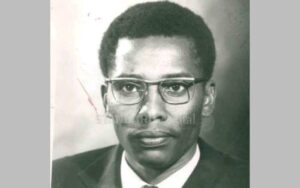

A genetic test has reportedly established a biological connection between James Solomon Njage and the late politician’s family, potentially strengthening his claim that he was Saitoti’s biological son.
According to court documents reported by The Star, Saitoti’s younger brother, a former commissioner at the National Police Service Commission, has filed an affidavit confirming that DNA testing established Njage as his nephew.
The development could significantly influence the ongoing succession dispute at the Milimani High Court, where Njage has been seeking formal recognition as one of the late statesman’s biological children.
A Family Secret That Emerged After Saitoti’s Death
Saitoti died on June 10, 2012, alongside six other people when their helicopter crashed in the Kibiku area of Ngong, Kajiado County.
His sudden death brought an end to a distinguished political career that saw him serve as Vice President, Internal Security Minister and a prominent figure in Kenya’s public administration.
However, more than a decade after his death, questions surrounding his family lineage and inheritance have continued to attract legal attention.
Njage’s battle began after he claimed that he had been excluded from the original succession proceedings following Saitoti’s death.
He reportedly argued that he was still a minor and living outside Kenya when the succession process was initiated, making it difficult for him to participate or assert his alleged rights as a biological child.
He subsequently approached the court seeking recognition of his parentage and a review of the estate distribution process.
Among the orders he sought were the revocation of the confirmed grant of probate, a comprehensive account of Saitoti’s estate and permission to exhume the former minister’s remains for DNA testing.
Widow Opposes Exhumation Bid
The application reportedly encountered strong opposition from Saitoti’s widow, Margaret Wanjiku Saitoti.
She questioned the evidence presented by Njage, arguing that he had not provided sufficient documentary proof to establish his alleged biological relationship with the deceased.
She also raised concerns about the lengthy delay, questioning why the matter had taken approximately 14 years to reach this stage.
Additionally, the widow reportedly warned that exhuming Saitoti’s remains would cause unnecessary emotional distress to the family.
The latest DNA development, however, could offer an alternative route to resolving the paternity question without disturbing the former minister’s grave.
DNA Breakthrough Changes the Case
Instead of relying on exhumation, the parties turned to paternal kinship DNA testing involving Saitoti’s surviving brother.
The results, according to the affidavit filed in court, established that Njage is biologically related to the former minister’s family as a nephew of the surviving brother.
The evidence could now become an important consideration as the court determines whether Njage should be formally recognised in the succession proceedings.
The High Court is scheduled to hear the matter further on November 23, 2026.
The upcoming proceedings are expected to shed more light on the implications of the DNA findings and whether the existing succession arrangements should be revisited.
For Njage, the development represents a significant moment in a legal battle that has stretched across more than a decade.
Beyond the inheritance dispute, the case highlights the complicated family questions that can emerge after the death of prominent individuals, particularly when children claim to have been left out of succession proceedings.
It also underscores the importance of proper estate planning, clear documentation of family relationships and ensuring that all eligible beneficiaries are considered before an estate is distributed.


