Toroitich arap Moi held Kenya firmly under his grip, leading the country with a political style that left both his closest allies and fiercest critics constantly guessing his next move. Revered by supporters as a master strategist and criticized by opponents for his iron-fisted rule, Moi remains one of Kenya’s most enigmatic leaders, with many of the secrets behind his long reign buried with him.
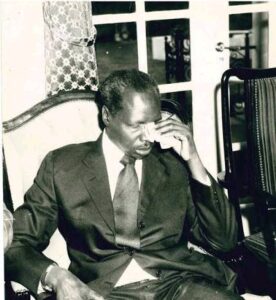

Known for his famous “Fuata Nyayo” philosophy, Moi projected the image of a leader committed to peace, unity and continuity. Yet behind that public persona was a sophisticated political machine that shaped Kenya’s destiny in ways that are still being debated today. Even years after his death, historians, political analysts and ordinary Kenyans continue to question how he managed to stay in power for nearly a quarter of a century.
One of the greatest mysteries surrounding Moi’s administration was the extensive intelligence network that reportedly stretched from the highest offices in government to the smallest villages across the country. While the state security apparatus played a central role during his presidency, many believe an equally powerful informal network of loyalists and grassroots informants kept him constantly updated on political developments. This system allegedly enabled his government to detect opposition activities early, allowing it to respond before dissent gained significant momentum during the turbulent push for multi-party democracy in the late 1980s and early 1990s.
Another chapter that continues to spark debate is the financial legacy of his era. The Goldenberg scandal, one of Kenya’s biggest financial controversies, exposed the loss of billions of shillings from public coffers. Although numerous investigations were conducted over the years, questions remain over the full extent of the transactions and where all the money ultimately ended up. For many Kenyans, the complete financial picture of that period remains unresolved.
Perhaps the most surprising decision of Moi’s political career came in 2002 when he chose the relatively inexperienced Uhuru Kenyatta as his preferred successor. The announcement stunned many within the then-ruling KANU party, triggering internal divisions and reshaping Kenya’s political landscape. Although Uhuru lost that election, he would later rise to become Kenya’s fourth president, prompting many observers to argue that Moi’s long-term political calculations extended far beyond his retirement.
Whether viewed as a visionary strategist, a political survivor or a controversial statesman, Moi’s legacy continues to divide opinion. What remains undeniable is that he left an indelible mark on Kenya’s history, and many of the decisions, alliances and state operations that defined his rule continue to fascinate generations long after he left office.