Former Deputy President Rigathi Gachagua has sparked fresh political debate after making an unexpected appeal to the Kalenjin community, urging its members to rally behind former Baringo Senator Gideon Moi and ensure that he secures a significant position in the next government.
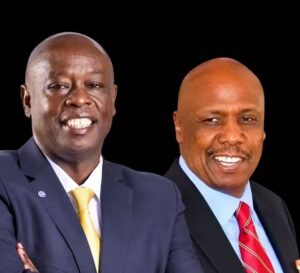
Gachagua, who has increasingly positioned himself as a key figure in the country’s emerging opposition politics, described Gideon Moi as an experienced and influential leader who deserves an opportunity to play a central role in the country’s future political leadership.
In a message that could attract considerable attention within Kenya’s political circles, Gachagua urged the Kalenjin community not to sit back and watch as political decisions are made without their meaningful participation. Instead, he challenged the community to organise itself strategically and negotiate for a place in the next administration.
His remarks appeared to carry a bigger political message: communities must be deliberate about their political interests and ensure that their leaders are represented whenever government positions and national leadership arrangements are being discussed.
By openly mentioning Gideon Moi, Gachagua has also introduced an interesting dimension into the country’s unfolding political conversations. Gideon, the son of former President Daniel arap Moi, comes from one of Kenya’s most influential political families and has maintained a presence in national politics, particularly in the Rift Valley region.
Gachagua’s endorsement could therefore reignite conversations about Gideon’s political future and whether he could emerge as an important player in the political realignments expected ahead of the 2027 General Election.
Interestingly, Gachagua was also keen to clarify that his political disagreements should not be interpreted as hostility towards the entire Kalenjin community.
He maintained that he has no personal or political problem with the Kalenjin people, insisting that his differences are specifically with President William Ruto.
This clarification is particularly significant given the political relationship between the Kikuyu and Kalenjin communities, which played a major role in the formation of the Kenya Kwanza administration.
Gachagua’s message appears aimed at separating his political confrontation with Ruto from relations between the two communities, which have historically shared important political and economic interests.
His appeal also raises several questions about the political arrangements taking shape ahead of 2027. Could Gideon Moi become a central figure in a possible new political alliance? Will the Kalenjin community consider Gachagua’s proposal? And what would such an arrangement mean for President Ruto’s political stronghold in the Rift Valley?
With the next General Election approaching, political leaders are increasingly making statements that could shape alliances, influence voters and redefine traditional political relationships.
For now, Gachagua’s message is clear: he wants the Kalenjin community to think strategically about its place in the next government, and he believes Gideon Moi is a leader worth considering.
Whether the community will embrace his proposal remains to be seen, but one thing is certain: Kenya’s 2027 political chessboard is gradually becoming more interesting.