Few women in Africa have lived a life as extraordinary as that of Graça Machel—a woman whose journey has been intertwined with two of the continent’s most defining liberation struggles.
Born on October 17, 1945, in Mozambique, Machel grew into a politician, education advocate and internationally respected humanitarian whose work has focused heavily on the rights of women and children.
Her remarkable journey would eventually see her become the only woman in modern history to serve as First Lady of two different countries—Mozambique and South Africa.
But behind that historic achievement lies a story marked by love, loss, political struggle and an enduring commitment to Africa.
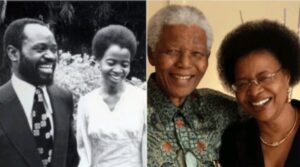
Machel first became part of Mozambique’s liberation struggle through her involvement in the independence movement. It was within this environment that she met Samora Machel, a revolutionary who would later become Mozambique’s first president.
Samora had inherited a powerful legacy of resistance. His grandfather, Malengani, had fought Portuguese forces in 1895, decades before Samora himself emerged as one of the most prominent leaders of the struggle against Portuguese colonial rule.
Samora’s personal life, however, was complicated. Before his rise to the presidency, he had relationships that resulted in several children.
In 1969, he married Josina Muthemba, a prominent Frelimo activist who had risen to become a leader in the movement’s women’s military wing.
Their marriage was tragically short-lived.
Josina died of leukaemia in April 1971, aged just 26. Her death came four years before Mozambique finally achieved independence.
On June 25, 1975, Samora Machel was sworn in as Mozambique’s first president following independence from Portugal.
Months later, his life took another significant turn.
He married Graça Simbine, who was serving as Mozambique’s Minister of Education. Their relationship had grown from their shared involvement in the liberation struggle and their commitment to rebuilding their newly independent country.
Graça soon emerged as an influential figure in her own right.
As Education Minister and First Lady, she championed expanded access to education, particularly for women and girls. She also supported vocational opportunities designed to help women gain greater economic independence.
Her work extended beyond classrooms.
Machel supported major public health initiatives, including nationwide vaccination campaigns, at a time when the young nation was struggling to build essential services from the ground up.
Under Samora’s government, Mozambique embarked on sweeping economic and social reforms, including the nationalisation of key industries and efforts to expand housing and employment opportunities.
But the country’s independence came with enormous challenges.
Samora’s government faced fierce opposition from apartheid South Africa and Rhodesia, which supported Renamo rebels fighting the Mozambican government.
Then, in October 1986, tragedy struck.
Samora Machel’s aircraft crashed in the Lebombo Mountains in South Africa, killing the Mozambican president and several others on board.
For Graça, it was another devastating loss.
Yet the tragedy would unexpectedly connect her to another towering figure in Africa’s liberation history—Nelson Mandela.
At the time, Mandela was still imprisoned under South Africa’s apartheid regime. He reportedly sent a message of condolence to Graça through his then-wife, Winnie Mandela.
What began as an expression of sympathy eventually developed into correspondence between Mandela and Graça. Over time, that correspondence grew into a close relationship.
Years later, their paths would converge in a way few could have imagined.
On Mandela’s 80th birthday in 1998, Nelson Mandela and Graça Machel were married in Johannesburg.
The marriage made Graça Machel the only woman in modern history to become First Lady of two separate countries.
Her extraordinary life also earned international recognition. In 1997, Queen Elizabeth II appointed her an honorary Dame Commander of the Order of the British Empire (DBE) in recognition of her humanitarian work.
From Mozambique’s struggle for independence to South Africa’s fight against apartheid, Graça Machel’s life has crossed some of the most important chapters in modern African history.
She lost one husband to a devastating aircraft crash, later found love with another legendary liberation leader, and continued building a legacy centred on education, humanitarianism and the rights of women and children.
Her story is therefore much bigger than the title of First Lady.
It is the story of a woman who stood at the intersection of love, liberation, tragedy and service—and emerged as one of Africa’s most remarkable women.