Kenya is undoubtedly one of Africa’s most remarkable countries, yet there are countless fascinating facts about the East African nation that many people, including some of its own citizens, may not know. From its breathtaking natural landscapes and world-famous wildlife to its rich cultural heritage and intriguing colonial history, Kenya has plenty of reasons to stand out on the global stage.
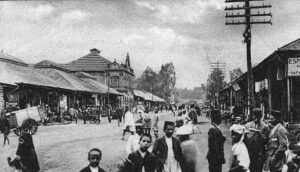

Located in East Africa, Kenya is officially known as the Republic of Kenya. It is bordered by Tanzania to the south, Uganda to the west, South Sudan to the northwest, Ethiopia to the north and Somalia to the northeast. The country also has a coastline along the Indian Ocean, making it an important destination for tourism, trade and international travel.
One of Kenya’s most interesting geographical features is the Equator, which passes directly through the country. This makes Kenya one of the few countries where visitors can experience standing on both the Northern and Southern Hemispheres without travelling long distances.
The country’s capital and largest city is Nairobi, a vibrant economic and political hub that has grown into one of Africa’s most influential urban centres. Nairobi is also unique because it is home to Nairobi National Park, where visitors can spot wild animals, including lions, giraffes, zebras and rhinos, against the backdrop of a modern city skyline.
Mombasa, on the other hand, holds a special place in Kenya’s history. It is the country’s oldest city and a major coastal destination with centuries of history influenced by African, Arab, Persian, Indian and European cultures. Its historic buildings, beautiful beaches and famous Fort Jesus make it one of the country’s most recognisable tourist attractions.
### Kenya’s incredible natural beauty and wildlife
Kenya is internationally recognised for its extraordinary wildlife and spectacular scenery. It is home to all five members of Africa’s famous Big Five: lions, elephants, leopards, buffaloes and rhinoceroses.
The country boasts some of the world’s most celebrated wildlife destinations, including the Maasai Mara National Reserve, Amboseli National Park, Tsavo National Parks and Lake Nakuru National Park.
The Maasai Mara is particularly famous for the annual Great Wildebeest Migration, when millions of wildebeest, zebras and gazelles move between Kenya and Tanzania in search of fresh grazing land and water.
Amboseli National Park is another spectacular destination, attracting visitors with its large elephant populations and breathtaking views of Mount Kilimanjaro, Africa’s highest mountain, located across the border in Tanzania.
Kenya is also home to the Great Rift Valley, an extraordinary geographical formation characterised by dramatic escarpments, volcanic mountains, lakes and breathtaking landscapes. The region features several famous lakes, including Lake Nakuru, Lake Naivasha and Lake Bogoria.
From the snow-capped peaks of Mount Kenya to the golden beaches of the Indian Ocean, the country’s geographical diversity makes it one of Africa’s most attractive tourism destinations.
### Kenya’s interesting coffee industry
Beyond tourism and wildlife, Kenya is also famous for producing some of the world’s most highly regarded coffee.
Kenyan coffee is particularly popular internationally because of its distinctive flavour, rich aroma and bright acidity. The country’s coffee-growing regions include Kiambu, Nyeri, Kirinyaga, Murang’a, Embu and parts of the Rift Valley.
Coffee farming supports thousands of farmers and contributes to the country’s agricultural economy through local consumption and international exports.
The industry also provides employment opportunities across various stages of production, including farming, harvesting, processing, transportation, marketing and export.
Although production volumes and earnings fluctuate from year to year, coffee remains one of Kenya’s important traditional export crops and a significant source of foreign exchange.
### What was Kenya called before 1920?
Perhaps one of the most interesting aspects of Kenya’s history is the name the country carried before becoming the Colony of Kenya in 1920.
Before 1920, the territory was officially known as the British East Africa Protectorate.
The name dates back to 1895, when Britain established the East Africa Protectorate and expanded its administrative and political control over the region.
A protectorate was a territory in which local authorities and traditional leadership structures could continue to exist, but ultimate political authority rested with a foreign power. In Kenya’s case, Britain exercised considerable control over administration, land policies and economic activities.
The origins of British colonial influence in East Africa can be traced to the European scramble for Africa, which was formalised through the 1884–1885 Berlin Conference. During this period, European powers negotiated rules and territorial claims that accelerated the colonisation of much of the African continent.
Following the establishment of British administration, the colonial government encouraged European settlers to occupy the fertile Kenyan Highlands. This development significantly affected African communities, particularly through land alienation, forced labour policies and restrictions on African economic opportunities.
In 1920, the British East Africa Protectorate was transformed into the Colony of Kenya, although the coastal strip continued to have a separate legal status as a protectorate under the Sultan of Zanzibar until independence.
Kenya eventually gained independence from Britain on December 12, 1963, ending decades of colonial rule. Exactly one year later, on December 12, 1964, the country became a republic, with Jomo Kenyatta serving as its first president.
### A country with countless stories to tell
From its fascinating colonial past to its remarkable wildlife, thriving cities, agricultural potential and beautiful coastline, Kenya is a country with an extraordinary identity.
Its combination of natural wonders, cultural diversity, historical landmarks and economic opportunities makes it stand out not only in Africa but also across the world.
Whether it is watching elephants roam beneath Mount Kilimanjaro, witnessing the spectacular wildebeest migration in the Maasai Mara, exploring the historic streets of Mombasa or enjoying the vibrant atmosphere of Nairobi, Kenya offers experiences that are difficult to find anywhere else.
Indeed, Kenya is much more than a safari destination. It is a country whose history, geography, people and natural beauty make it one of Africa’s most fascinating nations.


