Boosting cow milk production from 5 to 20 liters a day is achievable with a focused plan that improves nutrition, cow comfort, health, genetics, and daily routines. Think of it as removing bottlenecks one by one—each small gain compounds into a big jump in the bucket.
Start with nutrition. High-producing cows need balanced rations with adequate energy, protein, fiber, minerals, and vitamins. Aim for consistent access to high-quality forage (e.g., well-cured alfalfa, maize silage) plus an energy-dense concentrate tailored to stage of lactation. Target crude protein around 16–18% for early lactation, and ensure adequate bypass protein. Keep Neutral Detergent Fiber (NDF) in the 28–34% range so rumen function stays strong while not depressing intake. Provide free-choice clean water—cows can drink 80–120 liters a day, and even slight water restriction reduces milk. Add buffers (like sodium bicarbonate) if feeding high-concentrate diets to prevent subacute rumen acidosis. Use mineral premixes with the right calcium, phosphorus, magnesium, and trace elements; consider chromium and yeast cultures where economical to support intake and rumen stability.
Next, optimize cow comfort and housing. Shade, good ventilation, and dry bedding reduce heat stress and mastitis risk—both big milk killers. Aim for at least 10–12 hours of lying time daily; provide soft bedding (sand or dry organic bedding), 1 stall per cow, and 0.6–0.75 m feed bunk space per cow to minimize competition. In hot climates, install fans and soakers along the feed line; heat-stressed cows eat less and give less. Keep alleys scraped and dry to reduce lameness, which also reduces milk by lowering feed intake.
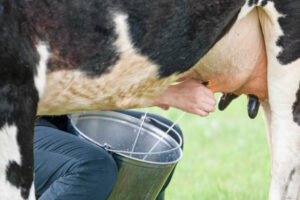
Focus on milking routine and udder health. Milk at consistent times, 2–3 times daily depending on herd capacity and labor. A calm, clean, and complete milking routine—pre-dip, forestrip, dry with single-use towels, attach within 60–90 seconds of teat stimulation, and post-dip—reduces clinical and subclinical mastitis and improves letdown. Ensure vacuum levels and pulsation ratios are correct; poorly maintained equipment damages teats and leaves milk behind. Track Somatic Cell Count (SCC) and treat promptly; consider blanket or selective dry-cow therapy and internal teat sealants at dry-off.
Health management underpins everything. Develop a vaccination and deworming schedule with your veterinarian, and monitor body condition score (BCS). Cows calving at a BCS of 3.0–3.5 (on a 5-point scale) typically peak higher. Prevent negative energy balance in early lactation by gradually stepping up concentrates pre- and post-calving (“lead feeding”). Provide adequate transition minerals (e.g., low-DCAD pre-fresh diets) to reduce milk fever and retained placenta, which suppress production. Hoof trimming 1–2 times per year prevents lameness and improves feed access.
Genetics and reproduction matter for sustained gains. Use artificial insemination with proven high-milk sires, but also select for fertility, udder health, and feet and legs to avoid fragile cows. Keep calving intervals near 12–13 months; long open periods reduce lifetime yield. Heifers should calve at 22–24 months at 85% of mature body weight to enter lactation strong.
Manage feeding frequency and consistency. Push up feed often (every 2–3 hours after feeding) and feed at the same times daily to encourage higher dry matter intake (DMI). Total Mixed Rations (TMR) reduce sorting; if feeding components, ensure uniform particle size. Track refusals (target 2–5%); too little means cows may be short, too much is waste.
Measure and adjust. Record daily milk per cow, feed intake, BCS, SCC, reproduction events, and disease cases. Small changes—like adding a fan line, correcting ration dry matter after a silage change, or fixing a pulsator—can add 1–3 liters each. Work with a nutritionist to test forages and reformulate when silage or hay lots change. With steady improvements across these areas, many farms can lift cows from 5 liters toward 12–15 in the short term, and 18–22 liters with sustained genetics, comfort, and ration optimization. The key is consistency: a cow with a comfortable environment, stable diet, healthy udder, and predictable routine will repay you at the tank.
If you see Banana with black spots, these are secrets you must know