He Went to the Police Station as a Witness—Then Walked Out Years Later as a Prisoner
What does it cost a person to do the right thing?
For Geoffrey Kinuthia of Trans Nzoia, what began as a simple act of kindness allegedly cost him more than a decade of his freedom.
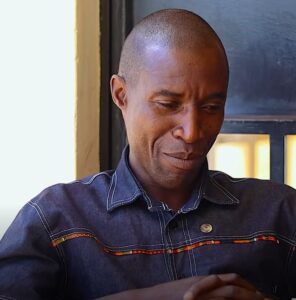
It was a Sunday afternoon in 2011. Kinuthia had left his home to meet friends at a local restaurant, expecting nothing more than an ordinary afternoon of conversation and relaxation.
Then everything changed.
According to Kinuthia, as he and his friends sat at the establishment, a stranger suddenly burst into the hall and began attacking one of the patrons.
The group intervened and managed to stop the confrontation.
Only later, Kinuthia says, did they learn that the attacker was the brother of a woman who was with the man who had been assaulted.
Rather than walk away from the unfolding drama, Kinuthia stayed behind to speak to the victim.
During their conversation, he learned that the man had allegedly lost some personal documents during the confrontation.
Kinuthia decided to help.
He offered to accompany the man to the nearest police station to report what had happened, explaining that he had witnessed the incident.
«“I went to the nearby police station and offered to accompany him since I had witnessed [the incident],” Kinuthia told Itugi TV.»
But what happened at the police station would transform Kinuthia’s life.
The Witness Becomes the Suspect
According to Kinuthia’s account, instead of being treated as a witness, he was arrested and placed in the cells as officers continued with their investigations.
The case soon took an even more complicated turn.
Kinuthia was accused of attacking a man identified as Boniface and stealing his documents, money and smartphone—allegations he disputes.
He also claims that some members of his own family sided with the accuser and supported efforts to have him prosecuted.
His bond was reportedly set at KSh1 million, an amount he could not afford.
He was subsequently remanded at Kitale Men’s Prison.
Just 14 days later, Kinuthia says, a court sentenced him to death for robbery with violence.
The man who had walked into a police station believing he was helping someone now found himself behind bars, facing the harshest punishment available under Kenyan law at the time.
Years Behind Bars
Time passed.
The outside world continued to change, but Kinuthia remained in prison.
Then, while still incarcerated, he received news that would alter the course of his life again.
According to his account, former President Uhuru Kenyatta commuted his death sentence.
A government-appointed lawyer subsequently took up his case and successfully argued for the death sentence to be reduced to a 20-year prison term.
By then, Kinuthia had already spent many years behind bars.
After the revised sentence was taken into account, he was eventually released several months later.
He walked out of prison carrying a story that had begun with something remarkably ordinary: a man choosing to help another person.
More than a decade earlier, Kinuthia had reportedly gone to a police station as someone who believed he was assisting a victim and offering himself as a witness.
Instead, he became the accused.
His account raises difficult questions about how quickly a person can move from witness to suspect, how criminal cases can alter the course of an individual’s life, and the importance of due process when someone’s freedom is at stake.
For Kinuthia, the experience remains a painful reminder that an ordinary decision to help a stranger can sometimes lead a person into circumstances they never imagined.
And after spending years behind bars, the question that remains is perhaps the simplest one of all:
What happens when doing the right thing puts you on the wrong side of the system?