For 50-year-old Maria Ngoda, the day she walked out of prison was supposed to mark the beginning of a new chapter.
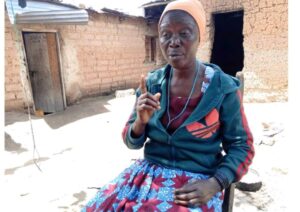
After months behind bars, she had imagined returning home, embracing her children and rebuilding the life she had been forced to leave behind.
Instead, freedom greeted her with an agonising silence.
There was no family waiting to welcome her. No warm meal. No familiar bed. No comforting voices of her children.
When Maria finally returned to her home in Iringa, Tanzania, she found a place that barely resembled the home she had known.
Her bed was gone.
Her mattress was gone.
Even the cooking utensils had disappeared.
But the emptiness inside the house was nothing compared to the pain of discovering that her family had also been scattered by circumstances beyond their control.
Maria had spent three difficult months in prison after being convicted of possessing 12 pieces of antelope meat. Despite serving only a fraction of her sentence, she had initially been handed a staggering 22-year prison term.
For Maria, the thought of spending more than two decades behind bars was devastating.
She often worried about her children and wondered what their lives would become without her. If she served the entire sentence, she feared she would only walk free at the age of 72—when the children she had raised would already be grown.
But when freedom finally came, the reality waiting outside prison was even more painful than she had imagined.
Her husband had died in 2016, leaving Maria as the sole caregiver of their four children. With their mother behind bars, the children were suddenly left to survive without the person who had held the family together.
Life became a struggle.
Maria’s daughter, who had been studying at Mlandege Secondary School, eventually dropped out and travelled to Dar es Salaam, where she found work as a housemaid.
Other children were also forced to find their own ways of surviving.
Some reportedly entered early marriages, while others turned to domestic work and other difficult forms of employment simply to put food on the table.
By the time Maria returned, the family she had fought to protect had been transformed by poverty, separation and hardship.
Her release therefore brought mixed emotions.
She was free, but the life she had hoped to return to was no longer there.
The woman who entered prison as a mother caring for four children walked out to find a family forced to grow up without her.
Now, Maria faces another difficult journey—not behind prison walls, but outside them.
She must rebuild a home, reconnect with her children and somehow piece together a family that was fractured during the months she spent behind bars.
For Maria, freedom has come.
But it has also come with the painful realisation that sometimes walking out of prison does not mean walking back into the life you left behind.