A joint security operation in Mandera County has led to the arrest of two men suspected of attempting to sell a wildlife trophy illegally, following the recovery of an astonishing 18-foot-long python skin from a guest house in Rhamu Town.
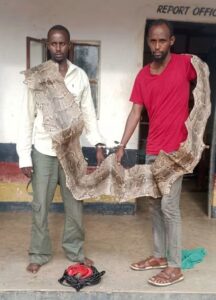
The dramatic operation, which involved police officers and Kenya Wildlife Service (KWS) personnel, has once again drawn attention to the illegal wildlife trade and the lucrative black market that continues to threaten the protection of wildlife in Kenya.
The suspects have been identified as Harret Farah, 45, and his alleged accomplice, Saraj Mohamed, 32. The two were arrested after security officers acted on actionable intelligence indicating that a suspected illegal wildlife transaction was taking place within the town.
According to information from officials at Rhamu Police Station, the officers moved swiftly to investigate the tip-off, leading them to a local guest house in Rhamu, where they conducted a targeted raid.
During the operation, the officers reportedly discovered and recovered the 18-foot python skin, which is suspected to have been intended for sale on the illegal wildlife market.
The recovery immediately raised concerns among authorities, given the potential financial value of wildlife products traded through underground networks.
Shocking Value of the Recovered Python Skin
Investigators believe the suspects may have been planning to sell the wildlife trophy for a substantial amount of money.
According to the information provided by police officials, python skins of this size can reportedly fetch between KSh 100,000 and KSh 200,000 on the black market, making the illegal trade a potentially lucrative venture for those involved.
The possibility of earning such a large sum from a single wildlife product highlights the financial incentives that can drive individuals into illegal wildlife trafficking.
However, authorities continue to warn against the exploitation of wildlife resources for personal gain, stressing the importance of protecting animals and ensuring that any trade involving wildlife products complies with the law.
The circumstances surrounding how the python was killed, where the skin originated, and whether other individuals were involved in the suspected transaction were not immediately established in the information available.
Joint Security Operation Sends a Warning
The arrests demonstrate the role of cooperation between police officers and wildlife authorities in tackling suspected environmental crimes.
By acting on intelligence and conducting a coordinated operation, the officers were able to recover the suspected wildlife trophy before the alleged transaction could proceed.
The operation also highlights the importance of intelligence-led policing in identifying and disrupting activities that might otherwise remain hidden from law enforcement agencies.
Wildlife trafficking remains a concern because illegal markets create financial incentives for the unlawful capture, killing, possession, and sale of protected animals and their products.
Authorities must establish the origin of the recovered python skin and determine whether the suspects violated any wildlife conservation laws.
What Happens Next?
Following their arrest, Farah and Mohamed are expected to face further investigations as authorities seek to establish the full circumstances surrounding the incident.
Investigators will likely focus on determining the source of the python skin, identifying the intended buyer, and establishing whether the suspects were acting alone or as part of a wider network dealing in illegal wildlife products.
The recovery of the skin could also provide investigators with important leads as they work to establish whether similar transactions have taken place in the area.
For now, the arrests serve as a reminder that wildlife products can attract significant sums on illegal markets, creating an incentive for criminal activity that undermines conservation efforts.
As investigations continue, authorities will be expected to determine the next legal steps against the two suspects and establish the facts surrounding the alleged attempt to sell the 18-foot python skin.
The case is a fresh reminder of the need for continued vigilance and cooperation between security agencies and wildlife conservation authorities to combat illegal wildlife trade and protect Kenya’s natural heritage.