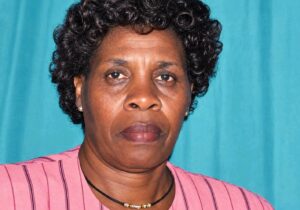
For nearly nine months, life around Leah Njeri Githuka’s home in Landless, Thika, appeared to carry on as usual.

Neighbours went about their daily routines. People came and went. The world outside her compound continued moving, seemingly unaware that an elderly woman was lying dead within her own home.
Even more striking, money continued to be sent to her phone for her upkeep.
But Leah was no longer alive.
The 82-year-old retired teacher and businesswoman had died alone, and her remains would only be discovered months later in circumstances that shocked her family and the wider Thika community.
On June 2, 2023, Leah’s granddaughter reportedly arrived at the family homestead and became alarmed after she could not find her grandmother. Attempts to reach her by phone reportedly failed, prompting her to seek help.
Nyumba Kumi officials were alerted before police and crime-scene investigators arrived at the compound.
What detectives encountered turned a simple search for an elderly woman into a disturbing death investigation.
Badly decomposed human remains were discovered near a mango tree. Nearby, investigators reportedly found the carcass of Leah’s dog, while at least 20 dead chickens were scattered around the compound.
The unusual scene immediately raised questions.
How had an 82-year-old woman died? Why had nobody discovered her body for so long? And could another person have been involved?
Leah had once lived a very different life.
She was a retired teacher and businesswoman and had been married to the late Isaac Githuku Gachanja. Together, they had four sons.
Reports published after her death indicated that the marriage eventually broke down, with people close to the family saying Isaac left Leah for another woman.
Leah subsequently moved away from the matrimonial home and settled in Landless, where one of her sons reportedly helped her acquire land and build a house.
But her later years were described as increasingly lonely.
According to reports, Leah became withdrawn and struggled emotionally following the breakdown of her marriage. As the years passed, her children also established lives away from the family home.
By the time of her death, two of her four sons had reportedly died, while the two surviving sons were living their own lives.
One of the surviving sons was a pilot and reportedly sent his mother KSh20,000 every month to support her needs.
The money kept coming.
But physical visits were apparently far less frequent.
Investigators reportedly established that none of Leah’s children had visited her for approximately nine months before her remains were discovered.
Neighbours also told investigators that they had last seen Leah alive roughly nine months earlier.
Because of this, some reportedly assumed that she had travelled to visit one of her sons.
There was therefore no immediate alarm when she stopped appearing around the neighbourhood.
It was only when her granddaughter arrived at the homestead on June 2, 2023, that the silence surrounding Leah’s whereabouts was finally broken.
Her remains were taken to General Kago Mortuary in Thika as detectives began piecing together the final chapter of her life.
Initially, investigators reportedly considered the possibility that Leah had been murdered.
The condition of the compound, coupled with the deaths of her dog and numerous chickens, added to the mystery. Detectives interviewed family members, neighbours and other people connected to the case.
According to an NTV account, about 10 people gave statements during the investigation. Samples believed to be Leah’s bones and clothing were also taken to the Government Chemist in Nairobi for analysis and DNA testing.
But despite the investigation, a definitive explanation for Leah’s death remained elusive.
A later report by NTV stated that after an investigation lasting nearly six months, detectives were unable to establish conclusively whether Leah had been murdered or had died from natural causes.
Investigators reportedly recommended an inquest into the circumstances surrounding her death.
That distinction remains important.
While murder was investigated as one possible explanation, there was no verified finding establishing that Leah had been killed.
Perhaps the most haunting part of the case was not only the uncertainty surrounding her death, but the extraordinary length of time she remained undiscovered.
She had a home.
She had children.
She had financial support.
She had neighbours.
Yet for approximately nine months, no one realised that she was no longer alive.
The case also raised painful questions about the difference between financial support and physical presence in the lives of elderly people living alone.
The monthly KSh20,000 could help provide food and other necessities, but it could not reveal whether Leah was healthy, whether she needed medical attention or whether she was still alive.
By the time she was discovered, the advanced decomposition of her remains had made it difficult for investigators to determine exactly what had happened.
Her story therefore ended with more questions than answers.
Leah Njeri Githuka had lived several lives in one: she was a teacher, a businesswoman, a wife and a mother of four.
Yet the final chapter of her life unfolded in almost complete isolation.
Outside her home, life continued normally.
Inside the compound, an elderly woman had died—and for months, nobody knew.