Many stories have been told about Kenya’s freedom fighters—men and women who risked everything to free the country from colonial rule. Yet behind the heroism and political achievements often lie deeply personal stories that remain largely untold.
One such story is that of Fred Kubai, a celebrated nationalist, former Cabinet minister, and one of the prominent figures in Kenya’s struggle for independence. While Kubai is remembered for his role in shaping the nation’s history, the events that unfolded after his death revealed a family drama that would keep the courts busy for more than two decades..
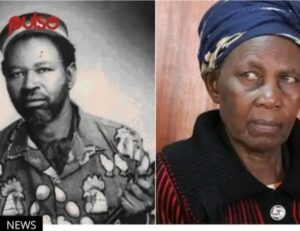

Kubai was known not only for his political influence but also for his complicated personal life. By the time he passed away on Madaraka Day in 1996, he had reportedly separated from several wives and had found companionship in Christina Gakuhi, the woman who would soon become the centre of one of Kenya’s longest-running succession disputes.
Shortly after his death, a two-page handwritten will surfaced. The document contained instructions that stunned family members and close associates alike. In the will, Kubai entrusted his entire estate to Gakuhi, a woman whom his four wives and children would later dismiss as nothing more than a househelp.
The second page of the document, written entirely in capital letters, offered a glimpse into the veteran politician’s final wishes. Kubai explained why he had parted ways with his four wives and made it clear who he wanted to oversee his affairs after his death.
His instructions were strikingly simple.
Despite having served in high office and enjoying national recognition, Kubai rejected the idea of an extravagant farewell. He directed that he be buried within 36 hours of his death. He requested a cheap coffin made from off-cut timber and insisted that no flowers be used to decorate either the casket or his graveside.
The freedom fighter also prohibited any harambee fundraising to cover burial expenses. There were to be no speeches, no lavish feasts, no alcohol, no singing, and no grand ceremonies. Instead, he wanted a quiet and modest send-off attended by only a few close family members.
To ensure these wishes were carried out, Kubai appointed Gakuhi as the executor of his will, giving her authority over his estate and burial arrangements.
But what appeared to be a clear final testament quickly ignited a bitter family war.
His wives and children challenged the will in court, alleging that Gakuhi had forged the document, which was dated January 19, 1991. What followed was a legal battle that stretched across an astonishing 23 years, pitting the four wives and their children against the woman Kubai had chosen to manage his legacy.
The dispute became one of the most closely watched succession cases in Kenya.
In a major twist, the courts later ruled in Gakuhi’s favour. Justice Chacha Mwita found that the criminal charges brought against her were unlawful and held that former Director of Public Prosecutions Keriako Tobiko had acted outside the law by allowing forgery charges to proceed in what was fundamentally a succession dispute.
The final chapter came in August 2019 when Family Court Judge Lucy Ongeri upheld the validity of the will. The court concluded that Kubai had indeed written the document and had made provisions for his children during his lifetime.
With that ruling, a legal battle spanning more than two decades finally came to an end.
In death, just as in life, Fred Kubai remained a man who defied expectations. The freedom fighter who helped shape Kenya’s future left behind not only a political legacy but also a family saga marked by controversy, courtroom battles, and a handwritten will that kept the nation talking for 23 years.