Kenyan motorists are staring at tougher consequences on the roads after the National Transport and Safety Authority (NTSA) rolled out a new traffic enforcement framework that introduces instant fines of up to Ksh10,000 for a wide range of offences.
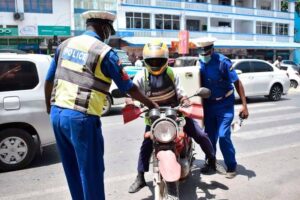

The new system, which officially took effect on June 1, 2026, marks a major shift in how traffic violations are handled. Instead of being taken to court immediately, offenders will now receive penalty notices once authorities gather sufficient evidence of an offence. The move is expected to transform road enforcement while placing greater responsibility on drivers, motorcycle riders, PSV operators, and even pedestrians.
Under the Traffic (Minor Offences) Rules, 2016, some violations will attract hefty penalties. Among the offences carrying the highest fine of Ksh10,000 are driving a vehicle without properly displayed number plates, operating a vehicle without a valid inspection certificate, causing obstruction on public roads, employing an unlicensed PSV driver, and failing to install a speed governor in a public service or commercial vehicle.
Speeding motorists are also in NTSA’s crosshairs. Drivers who exceed the speed limit by between 16 and 20 kilometres per hour will be slapped with a Ksh10,000 fine. Those exceeding the limit by 11 to 15 kilometres per hour will pay Ksh3,000, while motorists driving six to 10 kilometres above the limit will be required to part with Ksh500.
The authority has also tightened regulations around pedestrian safety. Drivers caught using pavements, footpaths, or designated pedestrian walkways risk paying Ksh5,000. A similar penalty awaits motorists who fail to stop when directed by a police officer.
Ignoring traffic signs or disobeying lawful directions from law enforcement officers will cost offenders Ksh3,000. Meanwhile, drivers operating vehicles without the appropriate licence endorsement face a Ksh3,000 penalty, while failing to renew a driving licence will attract a Ksh1,000 fine.
Motorcycle riders have not been spared. Boda boda operators found carrying more than one passenger will be fined Ksh1,000. Riders and passengers who fail to wear helmets or other prescribed protective gear will each face a Ksh1,000 penalty.
Public service vehicle operators are also under increased scrutiny. PSV drivers who fail to wear the required badge and uniform will pay Ksh2,000, while touting activities will attract a Ksh3,000 fine.
Seat belt compliance remains a key focus area. Vehicle owners who fail to install seat belts according to legal standards will be fined Ksh1,000 for every non-compliant seat. Drivers and passengers who neglect to wear seat belts while the vehicle is in motion risk a Ksh500 penalty.
NTSA says the modernised framework was developed in collaboration with the National Police Service, the Office of the Director of Public Prosecutions, the Judiciary, and other enforcement agencies. According to the authority, the reforms are aimed at enhancing road safety, boosting compliance with traffic regulations, reducing congestion in traffic courts, and improving the efficiency of law enforcement.
For many motorists, the new regulations serve as a warning that traffic enforcement is entering a new era. With instant penalties replacing lengthy court processes for minor offences, road users are being urged to familiarize themselves with the rules or risk costly fines that could significantly dent their pockets. The message from NTSA is clear: obey traffic laws, or pay the price.