A Kenyan court has handed a local driver a life sentence for his role in the shocking kidnapping of two Cuban doctors who were abducted by suspected Al@Shabaab militants in Mandera town in April 2019.
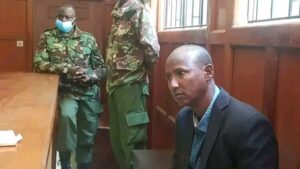
Issack Ibrein Robow was found guilty of helping the terror group plan and execute the daring attack that left a police officer dead and two foreign medical specialists missing for years.
The verdict was delivered by Milimani Senior Principal Magistrate Martha Nanzushi after the court heard chilling evidence detailing how Robow allegedly played a crucial role in facilitating the operation.
According to evidence presented during the trial, the attack happened on April 12, 2019, when the two Cuban doctors were travelling in Mandera under police escort.
Investigators established that Robow deliberately slowed down his vehicle during the ambush, creating an opportunity for the heavily armed attackers to execute their plan.
The court heard that the delay enabled the militants to attack the security team, killing police officer Mutundo Katambo before seizing the two doctors and fleeing with them towards Somalia.
The victims, identified as Dr. Assel Herrera Correa and Dr. Landy Rodríguez Hernández, were specialists who had been deployed to Kenya under a medical cooperation arrangement between the Kenyan and Cuban governments.
Their abduction sent shockwaves across the country, particularly in Mandera, where residents and health workers were left traumatised by the brazen attack.
What made the incident even more heartbreaking was the dedication the two doctors had demonstrated in serving patients in the troubled region.
Reports indicated that the Cuban specialists had continued attending to patients even as insecurity forced some local health workers to leave the area. Their decision to remain at work had earned them admiration from members of the community.
During the court proceedings, a surviving police officer gave an emotional account of the terrifying morning, describing the lasting psychological scars left by the attack.
“I still suffer nightmares and I no longer feel safe,” the officer told the court while recounting the events surrounding the ambush.
His testimony painted a picture of the fear and confusion that engulfed the scene as the attackers carried out their operation.
In delivering the sentence, the court handed Robow life imprisonment for terrorism-related offences. He was also sentenced to 25 years in prison for kidnapping and an additional 15 years for aiding the fatal attack.
The sentences marked a significant development in the long-running investigation into the abduction, which exposed the security challenges facing Kenya’s northeastern region.
However, even as the court delivered its verdict, the fate of the two Cuban doctors remained a painful unanswered question.
Their disappearance has continued to weigh heavily on their families, colleagues and the Cuban government, with hopes of learning what happened to them persisting years after the incident.
For the families, the sentencing may represent an important step towards accountability, but it does not erase the uncertainty surrounding the fate of their loved ones.
The case also serves as a grim reminder of the dangers faced by security officers and medical personnel working in regions affected by terrorism, where those dedicated to saving lives can unexpectedly become targets themselves.