Tension has emerged in Kenya’s education sector after detectives arrested a university student suspected of coordinating an examination cheating syndicate targeting the ongoing Kenya Certificate of Secondary Education (KCSE) examinations.
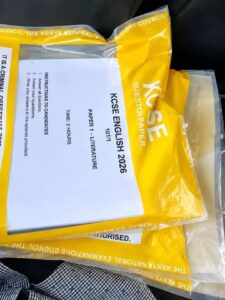

The arrest of the Kibabii University student has raised fresh concerns about examination integrity, with authorities intensifying efforts to protect the credibility of the national examinations as thousands of candidates across the country work towards completing their secondary school education.
The suspect, identified as John Odhiambo Opiyo, was reportedly arrested in Bungoma County after detectives allegedly traced the circulation of examination papers to him. Investigators suspect that he may have played a coordinating role in a network involved in sharing examination materials without authorisation.
During the operation, police officers reportedly recovered a mobile phone suspected to have been used to circulate the examination papers. The device is expected to undergo forensic examination as detectives seek to establish how the alleged network operated, identify other individuals who may have been involved and determine the extent of the suspected malpractice.
Following his arrest, Opiyo was taken to Bungoma Police Station, where he remains in custody as investigators prepare an inventory of the recovered evidence and continue gathering information that could assist in the case.
The arrest comes at a particularly sensitive moment, as candidates across the country have officially embarked on their KCSE theory examinations. With many students having spent years preparing for this important academic milestone, the emergence of suspected examination leakage has once again drawn attention to the challenges facing the country’s examination management system.
Meanwhile, investigators have also reported suspected examination malpractice incidents in Garissa and Wajir counties. Efforts to identify and apprehend those believed to be behind the incidents were reportedly ongoing as authorities moved to establish the full circumstances.
The developments were reported as candidates sat their English and Chemistry papers on Monday, marking an important stage in this year’s national examination calendar.
Speaking during the opening of an examination container in Borabu, Nyamira County, Education Cabinet Secretary Migos Ogamba revealed that this year’s KCSE candidature had crossed the one-million mark for the first time in the history of the examinations.
According to the Cabinet Secretary, the number of registered candidates had increased by 5.27 per cent compared with the 2025 examination cohort.
Ogamba further explained that the government had put in place arrangements to facilitate the smooth administration of the examinations across the country, with more than 10,000 examination centres participating in the exercise.
The milestone of surpassing one million candidates highlights the growing number of learners progressing through Kenya’s secondary education system and the enormous responsibility facing examination administrators.
This year’s candidates also represent the second-last cohort expected to sit the KCSE examinations under the longstanding 8-4-4 education system as the country continues transitioning to the Competency-Based Education (CBE) curriculum.
As investigations into the alleged cheating syndicate continue, the arrest in Bungoma and the reported incidents in Garissa and Wajir are likely to intensify scrutiny of examination security.
For millions of Kenyans, the KCSE remains a crucial academic milestone that can shape students’ opportunities for university admission, scholarships and future careers.
Authorities are therefore expected to remain vigilant to ensure that every candidate competes fairly and that the examination results reflect genuine academic performance.
The suspect remains under investigation, and the allegations against him have yet to be established in court.


