Retired Major General George Agoi, the military officer who rose to national and international prominence for coordinating rescue operations following the devastating 1998 terrorist bombing of the United States Embassy in Nairobi, died carrying what he believed was a painful secret about his departure from the military.
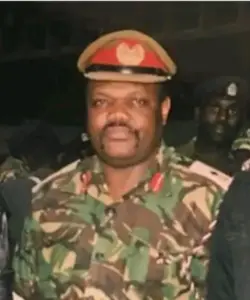

Agoi, who commanded the multi-agency rescue operation after the August 7, 1998, attack, had always maintained that his exemplary performance during one of Kenya’s darkest moments made him a target of powerful individuals within the military establishment.
Despite earning praise for his leadership during the national tragedy, the retired military officer believed that his success had sparked jealousy among senior officers, eventually leading to what he described as a calculated campaign to force him out of government.
The devastating attack, orchestrated by the al-Qaeda terrorist network, involved nearly simultaneous bombings targeting US embassies in Nairobi, Kenya, and Dar es Salaam, Tanzania.
In Nairobi, more than 200 people lost their lives, while approximately 4,000 others sustained injuries. In Dar es Salaam, 11 people were killed and about 85 injured, making the attacks among the deadliest terrorist incidents in the region’s history.
At the centre of Kenya’s emergency response was Agoi, who coordinated different rescue teams and provided regular televised updates as the country struggled to come to terms with the scale of the destruction.
His leadership attracted considerable attention, both locally and internationally. He described the attacks as carefully planned and acknowledged that the incident had exposed serious security and emergency preparedness challenges in the country.
According to Agoi, his work during the rescue operation earned him recognition from the international community, with invitations to participate in disaster preparedness and emergency response forums in several countries.
He claimed he received invitations from Israel, the United States and South Africa, among other nations, but alleged that he was repeatedly denied the necessary clearance to travel.
In a 2009 interview, Agoi opened up about what he considered the beginning of his troubles, claiming that the problems started immediately after the rescue mission was completed.
“I sensed all was not well after the rescue mission in which I coordinated all teams,” he recalled.
The retired general believed that his performance during the operation had unsettled some influential individuals who were uncomfortable with the recognition he had received.
He maintained that the experience was followed by efforts to sideline him, including alleged restrictions that prevented him from attending commemorative events marking the anniversary of the bombing.
Although he expressed disappointment over how his military career ended, Agoi insisted that he was not bitter and did not harbour grudges against anyone.
In 2000, shortly after the bombing rescue mission, President Daniel arap Moi appointed him Kenya’s ambassador to Ethiopia in December. However, Agoi viewed the diplomatic appointment as little more than a soft landing following what he believed was his forced departure from the military.
“When my services in the military were terminated and subsequently I was appointed ambassador, I realised I was being pushed out of government,” he said.
He also lamented what he considered the country’s failure to recognise individuals who had dedicated their lives to serving the nation.
“People who wholeheartedly work for the country as patriotic citizens are not remembered, as in my case. I have been forgotten, just like many others before me,” he said.
After completing his diplomatic assignment, Agoi ventured into politics, hoping to continue serving Kenyans through elective leadership. He unsuccessfully contested the Lugari parliamentary seat in Kakamega County, at a time when the constituency had not yet been divided into the current Lugari and Likuyani constituencies.
Sadly, the retired military officer passed away on August 2, leaving behind a legacy closely associated with courage, leadership and humanitarian service.
He was laid to rest on Tuesday, August 11, at his family farm in Soy Scheme, Roberts Village, Likuyani, Kakamega County.
Agoi is survived by his widow, Emily Ayuma Agoi, four children and three grandchildren. Family members and friends remembered him as a warm-hearted family man who approached his responsibilities with dedication and commitment.
His death attracted national attention, with former President Uhuru Kenyatta mourning him as a national hero and an icon of humanitarian service.
For many Kenyans, Agoi will be remembered as one of the key figures who stood at the forefront of the country’s response to the 1998 embassy bombing, coordinating rescue efforts during a moment of unimaginable pain and confusion.
Yet, beyond the public recognition and the military title he carried, his story also reflects the personal struggles of a man who believed that his greatest professional achievement had ultimately contributed to his downfall.
While his allegations about the circumstances surrounding his departure from the military remained his personal account, his contribution during the 1998 disaster remains an important part of Kenya’s history.