Imagine looking at your watch at midnight, expecting darkness to have covered the landscape, only to step outside and find the sun still shining brightly in the sky.
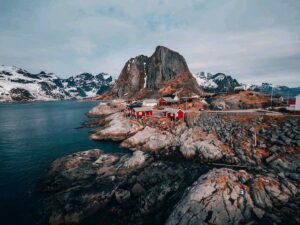

For millions of people living in parts of the far north, this is not a scene from a fantasy movie. It is a remarkable natural phenomenon known as the midnight sun, a period when the sun remains above the horizon for 24 hours or more and darkness virtually disappears.
The phenomenon occurs in areas within or near the Arctic Circle during the Northern Hemisphere’s summer. The farther north one travels, the longer the period of continuous daylight becomes.
One of the most famous destinations for experiencing the midnight sun is Norway. Parts of northern Norway experience continuous daylight during the summer months, earning the country its popular nickname, the “Land of the Midnight Sun.” The combination of endless daylight, dramatic fjords, mountains and Arctic landscapes creates an extraordinary experience for residents and visitors alike.
In some northern communities, people can spend weeks without seeing a conventional sunset. Instead, the sun appears to move across the sky, dipping closer to the horizon before rising again without ever completely disappearing.
Sweden also experiences the midnight sun in its northernmost regions. Areas above the Arctic Circle can experience prolonged periods of daylight during summer. The duration increases as one travels farther north, with some locations experiencing weeks when the sun never fully sets.
Further east, Finland offers another spectacular opportunity to witness the phenomenon. The northern region of Lapland is particularly famous for its exceptionally long summer days. In areas around and north of the Arctic Circle, daylight can continue for extended periods, producing what many describe as bright, almost dreamlike nights.
The phenomenon is not limited to mainland European countries. Greenland, an autonomous territory within the Kingdom of Denmark, also experiences the midnight sun. In northern Greenland, the sun remains above the horizon for extended periods during the summer. However, mainland Denmark itself does not experience a true midnight sun because it lies too far south.
Russia is another country where the phenomenon can be witnessed. Large parts of northern Russia lie above the Arctic Circle, and cities such as Murmansk experience extended periods of continuous daylight during summer.
But what causes this extraordinary event?
The answer lies in the Earth’s axial tilt.
Earth is tilted on its axis by approximately 23.5 degrees. As the planet travels around the sun, this tilt causes different parts of the Earth to receive varying amounts of sunlight throughout the year.
During Northern Hemisphere summer, the North Pole tilts toward the sun. As Earth rotates, regions within the Arctic Circle can remain facing the sun for an extended period instead of moving completely into darkness.
The closer a location is to the North Pole, the longer the midnight sun can last. At the North Pole itself, the sun can remain above the horizon for roughly six months before disappearing for a similarly extended period during winter.
However, the midnight sun is not a permanent condition. It is strictly seasonal.
The endless summer daylight eventually gives way to the opposite phenomenon—the polar night—when the sun remains below the horizon for extended periods during winter.
For people living in these northern regions, therefore, the calendar brings two dramatically different worlds: a summer when darkness virtually disappears and a winter when daylight becomes a rare and precious sight.
The midnight sun remains one of Earth’s most fascinating natural spectacles—a powerful reminder of how the planet’s tilt, rotation and journey around the sun shape life and landscapes across the globe.