Simeon Nyachae remains one of Kenya’s most influential political and business figures, a man whose remarkable journey from humble beginnings to the heights of public service and wealth left an unforgettable mark on the country. His death on the morning of February 1, 2021, only a few days before his 89th birthday, brought to a close the life of a leader who served Kenya in different capacities for decades.
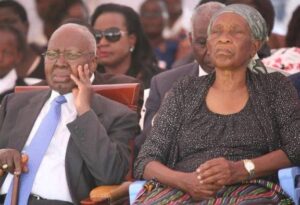
Born on February 6, 1932, Nyachae’s story began in Kisii, where he started his education in 1941 at Nyanchwa Seventh-day Adventist School. He later joined Kereri Intermediate School in 1947 before enrolling at Kisii Government African School in 1949. However, his education took an unexpected turn in 1951 when he left school to work as a clerk at the camp of his father, Senior Chief Musa Nyandusi. That decision would become the foundation of an extraordinary career in Kenya’s civil service.
Determined to advance his knowledge, Nyachae travelled to London in 1957 to study public administration. After completing his studies, he returned to Kenya in 1960 and was appointed a District Officer in Kangundo Division. His commitment and exceptional administrative skills earned him another opportunity to study at Churchill College, Cambridge, where he pursued a diploma in public administration. By December 1963, shortly after Kenya attained independence, he had risen to the powerful position of District Commissioner, becoming one of the country’s most respected administrators.
Nyachae later ventured into politics, where he built a reputation as a fearless and influential leader. Over the years, he became one of the most recognizable figures in Kenyan politics, admired by supporters for his discipline, decisiveness, and commitment to development.
Away from politics, Nyachae also built a vast business empire that made him one of Kenya’s wealthiest individuals. His investments stretched across agriculture, banking, real estate, transportation, manufacturing, and large-scale farming. He held interests in financial institutions, including Credit Bank and NCBA Group, while also investing in milling businesses and companies under Sansora Holdings. His diversified investments ensured that his legacy extended far beyond public service.
Nyachae was also the patriarch of one of Kenya’s largest and most prominent families. Throughout his lifetime, reports indicate that he had six wives and more than 20 children, with some accounts placing the number as high as 35, reflecting his large polygamous family.
Among his earliest wives were Esther Nyaboke and Druscilla Kerubo, both of whom died before him. Nyaboke is remembered as the mother of several daughters and two sons, while Kerubo reportedly passed away shortly after giving birth to their daughter, Mary. Another well-known wife, Martha Mwango, became the mother of several of the Nyachae family’s most publicly known children.
Before his death, Nyachae took steps to ensure an orderly management of his vast estate by appointing three of his children as executors of his will. In the document, he identified his surviving widows as Grace Wamuyu Nyachae and Martha Mwango Nyachae. He also listed his surviving sons, among them Charles Ayako Nyachae, Kenneth Bitange Nyachae, Michael Moragia Nyachae, David Moragiah Nyachae, Noah Ndemo Nyachae, Lee Karue Nyachae, Moses Nyandusi Nyachae, Eric Maina Nyachae, Joseph Nyandusi Nyachae, and Leon Nyandusi Nyachae.
Although Simeon Nyachae is no longer alive, his legacy continues through his family, his businesses, and the many development initiatives associated with his public service. His remarkable rise from a clerk in his father’s camp to one of Kenya’s most powerful civil servants, influential politicians, and successful businessmen remains an inspiring story of determination, ambition, and lasting impact.