The rapid advancement of artificial intelligence (AI) is transforming the global job market, raising serious questions about the future of employment and the careers that will remain relevant as machines become increasingly capable of performing tasks traditionally handled by humans.
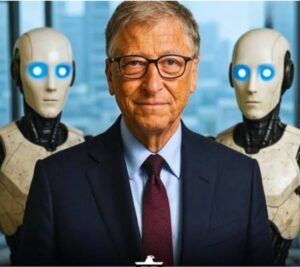

From writing computer programmes to analysing data, answering customer queries and creating digital content, AI-powered tools are already changing how businesses operate. As companies invest billions of dollars in automation and artificial intelligence, millions of workers are beginning to worry about whether their skills will remain valuable in the years ahead.
The growing uncertainty has been highlighted by discussions surrounding Microsoft co-founder Bill Gates, who has repeatedly explored the economic and social implications of AI. Reports have attributed four career areas to the discussion about jobs that could remain comparatively resilient as automation expands: software development, biology, energy work and professional sports.
Although no occupation is completely immune to technological disruption, these fields involve specialised knowledge, complex decision-making, physical expertise or distinctly human qualities that may make them more difficult to automate entirely.
1. Software Developers and Computer Programmers
Surprisingly, software development is among the professions often identified as potentially resilient in the age of AI, even as artificial intelligence becomes increasingly capable of writing computer code.
AI tools can already generate programming instructions, identify errors, test applications and assist developers in completing projects more quickly. These capabilities have raised concerns that companies could eventually require fewer programmers to perform certain tasks.
However, developing sophisticated software involves much more than writing lines of code.
Software developers must understand users’ needs, design secure systems, solve complicated technical problems, manage databases and ensure that applications function reliably. They must also evaluate AI-generated code, identify security vulnerabilities and determine whether a proposed solution meets the intended requirements.
As AI systems become more advanced, the role of programmers could evolve from manually writing every instruction to designing, supervising and managing increasingly intelligent systems.
For aspiring technology professionals, this means that learning programming languages alone may not be enough. Skills in cybersecurity, software architecture, data management, AI development and critical thinking could become increasingly valuable.
The future may favour developers who know how to work effectively with AI rather than those who attempt to compete against it in every task.
2. Biologists and Life Science Researchers
Biology is another field that could remain important despite the rapid expansion of artificial intelligence.
AI is already helping scientists analyse genetic information, identify potential medicines, study diseases and interpret enormous quantities of biological data. These developments could accelerate medical research and improve the speed at which scientists discover new treatments.
Nevertheless, biological research frequently requires physical experimentation, careful observation and an understanding of complex living systems.
Scientists working in laboratories may need to collect specimens, conduct experiments, handle biological materials, investigate unexpected results and determine whether computer-generated predictions correspond with real-world evidence.
Living organisms are also extraordinarily complex. A result predicted by an AI model does not automatically prove that the same outcome will occur in an actual human body, animal or biological environment.
Human expertise remains essential in designing experiments, interpreting findings, addressing ethical questions and deciding whether scientific evidence supports a particular conclusion.
Biologists working in biotechnology, genetics, pharmaceutical research, environmental science and medical innovation could therefore benefit from the growing use of AI.
Rather than eliminating the profession, artificial intelligence may change how biological research is conducted, giving scientists powerful tools to investigate questions that were previously difficult to answer.
3. Energy Workers and Power Infrastructure Specialists
As artificial intelligence expands, the world will need more electricity to power data centres, computer networks and other digital infrastructure.
This creates an important opportunity for professionals working in energy generation, electricity distribution, renewable energy and power-grid maintenance.
AI systems may help energy companies predict electricity demand, monitor equipment, identify faults and improve the efficiency of power generation. Automated systems can also assist engineers in detecting problems before they cause major disruptions.
However, electricity infrastructure exists in the physical world, where equipment must be installed, inspected, repaired and maintained.
Electricians, power-line technicians, plant operators and infrastructure engineers may be required to work in challenging environments, respond to emergencies and carry out repairs that cannot always be completed remotely.
Power grids are also critical national infrastructure. Their management requires careful coordination, safety procedures, technical expertise and accountability.
Although automation could change the responsibilities of energy workers, the growing demand for reliable electricity may create new opportunities for people with specialised technical skills.
Workers who combine practical experience with knowledge of smart grids, renewable energy systems, electrical engineering and digital monitoring technologies could be particularly well positioned for the changing employment landscape.
4. Professional Athletes and Sports Personalities
Professional sports offer a different perspective on why certain careers may remain resilient in an AI-driven economy.
Artificial intelligence can analyse players’ performances, calculate statistics, assist coaches in developing strategies and help athletes improve their training programmes.
Robots can also compete in certain sporting activities, demonstrating impressive levels of precision and coordination.
However, professional sports are not simply about identifying the strongest, fastest or most technically efficient competitor. Much of their appeal comes from watching human beings demonstrate extraordinary ability, determination, creativity and resilience under pressure.
Fans develop emotional connections with athletes, celebrate their victories, sympathise with their defeats and follow their personal journeys.
The unpredictability of human competition is also central to the excitement of sports such as football, athletics, basketball and baseball.
While AI may transform coaching, training, refereeing and sports analysis, it is less likely to replace the human experience that attracts millions of spectators to sporting events.
Professional athletes therefore occupy a distinctive position in the AI debate because their value extends beyond the physical tasks they perform.
Nevertheless, sports careers remain highly competitive, and injuries, age and limited opportunities can affect an athlete’s ability to earn a living.
Microsoft’s Workforce Changes Raise Questions About the Future of Employment
Concerns about AI-driven disruption have grown alongside major restructuring exercises in the technology industry.
Microsoft, one of the world’s largest technology companies, has undertaken workforce reductions and organisational changes while investing heavily in artificial intelligence, cloud computing and data-centre infrastructure.
The claims surrounding a voluntary exit programme involving approximately 60,000 employees worldwide should, however, be treated cautiously. The precise scope and terms of any such programme require confirmation from reliable company announcements or other authoritative reporting.
Microsoft’s broader workforce changes nevertheless illustrate a major challenge facing the technology sector: companies are attempting to balance spending on emerging technologies with operational efficiency, profitability and staffing needs.
As businesses adopt AI tools, some jobs may disappear, others may change significantly, and entirely new occupations may emerge.
Bill Gates has also discussed the broader implications of AI for employment, productivity and society. His public commentary has contributed to an increasingly important debate about how governments and businesses should respond if technological progress leaves some workers struggling to find new opportunities.
Possible responses include strengthening education and vocational training, helping displaced workers acquire new skills and reviewing social protection systems to ensure that economic gains from technological advancement are more widely shared.
What This Means for Workers and Students
The message for workers, students and job seekers is not that everyone should abandon careers that AI can partially automate.
Instead, people should understand how technology is changing their chosen professions and develop skills that complement it.
Programmers can strengthen their expertise in system design and cybersecurity. Biology students can combine scientific knowledge with laboratory skills and data analysis. Energy workers can pursue technical qualifications in electrical systems and renewable energy. Athletes can use technology to improve performance while developing the discipline and adaptability their careers demand.
Other occupations involving human relationships, practical judgement, accountability and complex physical work may also remain important, although their responsibilities could evolve.
Ultimately, the four career areas highlighted in discussions about AI are not guaranteed to be completely safe from automation. Rather, they demonstrate that professions combining technological knowledge, specialised expertise, physical capability and human value may have better opportunities to adapt.
As artificial intelligence continues to advance, the biggest challenge may not simply be finding a job that machines cannot perform. It may be learning how to remain valuable in a world where machines can perform an increasing number of tasks.
For the next generation of workers, adaptability, continuous learning and the ability to work alongside AI could prove just as important as the career they choose.


