A remarkable medical incident has left healthcare workers and members of the community amazed after doctors at Kabartonjo Sub-County Hospital in Baringo County discovered that a mother who had just delivered one baby was carrying an undetected twin.
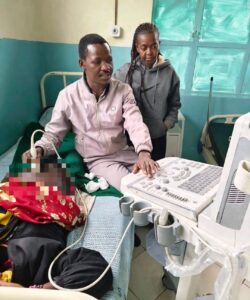
What initially appeared to be an ordinary delivery turned into an extraordinary medical experience when the hospital team realised that another baby was still inside the mother’s womb, despite antenatal scans having indicated that she was expecting only one child.
The unexpected discovery happened shortly after 10 p.m., when the mother successfully delivered her first baby. The medical team initially believed that the delivery had been completed and that the mother would soon begin recovering from childbirth.
However, a midwife noticed something unusual during the post-delivery assessment. Despite the arrival of the first newborn, the mother’s uterus remained unusually bulky, raising concerns that something was not quite right.
Rather than dismissing the observation, the midwife alerted the medical team for further examination.
What followed was an astonishing discovery that completely changed the course of the delivery. Upon conducting a closer examination, the healthcare workers established that the mother was still carrying a second baby.
The unexpected newborn was found in a breech position, meaning the baby was positioned with the buttocks or feet facing downwards instead of the head, making the delivery more complicated.
With two lives depending on their quick assessment and medical expertise, the healthcare workers immediately shifted their attention to safely delivering the second baby.
The medical team carefully managed the delivery using the Løvset manoeuvre, a recognised obstetric technique used to assist in delivering the arms of a baby during a breech birth.
Fortunately, their efforts paid off, and the second baby was delivered safely.
Further examination revealed that the newborns had separate placentas, confirming an important detail about the twin pregnancy.
In an especially encouraging outcome, both babies survived the unexpected delivery and were reported to be in good condition alongside their mother.
Jack Kemboi, one of the medical staff members who shared the remarkable experience, highlighted the importance of conducting thorough examinations after childbirth.
According to the account, the midwife’s decision to investigate the unusually bulky uterus proved crucial in identifying the second baby before it was too late.
The incident has also drawn attention to the unpredictable nature of childbirth and the importance of vigilance among healthcare professionals, particularly when clinical findings do not match earlier antenatal assessments.
Although pregnancy scans play an important role in monitoring unborn babies, this incident demonstrated why medical teams must continue assessing mothers carefully throughout labour and after delivery.
For the mother, what began as the birth of one child ended with an unexpected double blessing. Her family went to the hospital expecting to welcome one newborn but ended up celebrating the arrival of twins.
The remarkable experience at Kabartonjo Sub-County Hospital is also a testament to the dedication of healthcare workers whose attentiveness, teamwork and quick decision-making can make the difference between life and death.
What could easily have become a medical emergency turned into a joyful story of two newborns safely delivered, thanks to the sharp observation of a midwife and the swift response of the medical team.