A decades-old murder mystery has finally been solved after authorities identified a woman whose remains were discovered buried in a Nashville basement nearly 40 years ago, bringing long-awaited answers to a family that had spent decades wondering what happened to their loved one.
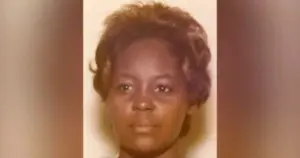
The woman was identified as Toni L. Gordon, who was 31 years old when she was murdered. Her remains were among those of two women discovered in shallow graves beneath the dirt floor of a basement in Nashville, Tennessee, in 1987.
For almost four decades, investigators struggled to establish her identity, knowing her only by the nickname “Lil’ Bit”, which had reportedly been used by the man responsible for her death.
The Nashville Metropolitan Police Department announced on Monday that detectives had finally identified Gordon through advanced forensic genetic genealogy, a breakthrough that brought an emotional chapter of the investigation closer to closure.
According to People, investigators believe Gordon and another woman, 23-year-old Sheila Cummings, were killed in 1985. Their bodies remained hidden beneath the basement floor until they were discovered two years later.
The discovery triggered a murder investigation that eventually led police to James Shaffer, who had previously rented the property where the remains were found.
Following the discovery, Shaffer confessed to killing both women, according to police. He was subsequently convicted and sentenced to two life terms in prison for the murders.
However, despite securing convictions, authorities faced another difficult challenge: establishing the identities of the two victims.
While investigators knew that one victim was Cummings, the other remained unidentified for decades. Detectives continued referring to her as “Lil’ Bit” as they pursued leads in an effort to establish her real name and locate her relatives.
Shaffer died in prison in 2004, but the mystery surrounding the identity of his second victim remained unresolved.
DNA Technology Finally Cracks Decades-Old Mystery
A major breakthrough came in 2025 when investigators successfully identified Sheila Cummings, leaving Gordon as the only unidentified victim from the 1987 discovery.
Determined to give the remaining victim her identity back, detectives turned to forensic genetic genealogy, a modern investigative technique that combines DNA analysis with family-history research.
The process involves examining genetic information recovered from unidentified remains and comparing it with DNA profiles available through genealogical databases to identify possible relatives.
By tracing genetic connections and building family trees, investigators can sometimes establish the identities of people whose remains have remained unidentified for decades.
The technique has increasingly become an important tool in solving cold cases, particularly those involving unidentified bodies and victims whose families have spent years searching for answers.
In Gordon’s case, the breakthrough finally enabled detectives to establish her identity as Toni L. Gordon, nearly 40 years after her remains were discovered.
Family Had No Idea She Was Murdered
Perhaps the most heartbreaking revelation surrounding the case is that Gordon’s relatives had no idea she had been killed.
According to police, her family initially believed she had moved to another state. Over time, they lost contact with her and were left without knowing what had happened to their loved one.
For years, they had no confirmation of her whereabouts and apparently had no reason to suspect that she had become the victim of a brutal murder.
Following the successful identification, Nashville detectives contacted her relatives and informed them that the woman they had lost touch with decades earlier had been murdered.
The identification is expected to provide the family with some measure of closure after years of uncertainty, although it cannot erase the pain of losing a loved one under such tragic circumstances.
Several Organisations Assisted in the Investigation
The Nashville Metropolitan Police Department acknowledged the contributions of several organisations that helped investigators solve the decades-old mystery.
Among those credited were DNA Investigative Solutions, Bode Technology, the National Missing & Unidentified Persons System, the Davidson County Medical Examiner’s Office and the Tennessee Bureau of Investigation.
Their combined efforts demonstrate how advances in forensic science can help law enforcement agencies revisit old investigations and finally give names to victims who might otherwise remain unidentified.
For Toni L. Gordon’s family, the announcement marks the end of a nearly four-decade search for answers.
What began as a mysterious discovery beneath the floor of a Nashville basement in 1987 has finally resulted in the restoration of a woman’s identity.
Although the man responsible for the murders died behind bars in 2004, the identification of Gordon ensures that she will no longer be remembered merely as an unknown victim called “Lil’ Bit”, but by her real name, Toni L. Gordon.