A quiet neighbourhood was thrown into unexpected drama after a woman decided to cut down her neighbour’s late husband’s favourite tree, believing she was simply removing an annoying obstacle that had overstayed its welcome.
Unfortunately for her, the decision would uncover a family secret that nobody in the neighbourhood had anticipated.
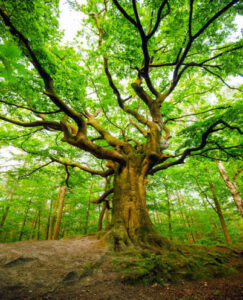
For years, the large mango tree had stood near the boundary separating the two properties. It was planted by my late husband, Joseph, shortly after we built our family home. To him, the tree was more than just a source of shade or delicious mangoes. It was a special reminder of our early years together, when we had little money but plenty of dreams.
Every afternoon, Joseph would sit beneath it, enjoying the breeze, reading newspapers and occasionally pretending to supervise the neighbours’ activities.
After his death, I refused to let anyone touch the tree. It became one of the few things that still made me feel connected to him.
Unfortunately, my neighbour, Margaret, had a completely different opinion.
Margaret was the kind of woman who believed every inconvenience in the neighbourhood was a personal attack against her. If your chicken crossed her compound, she complained. If your dog barked, she threatened to call the police. If your children laughed too loudly, she behaved as though someone had organised a political rally outside her bedroom.
For months, she complained that the mango tree was blocking sunlight from reaching her kitchen. She also claimed its roots were damaging her fence, although nobody could establish how a tree several metres from her kitchen had become such a national emergency.
I repeatedly explained that the tree belonged to my family and that I had no intention of cutting it down.
Margaret eventually stopped arguing with me.
I thought she had finally accepted defeat.
I was wrong.
One Saturday morning, while I was away visiting my sister, I received a phone call from a neighbour.
“Madam, have you seen what is happening at your home?” he asked.
Before I could respond, he informed me that Margaret had hired several workers who were busy cutting down Joseph’s beloved mango tree.
I rushed home, but by the time I arrived, the damage had already been done. The once-beautiful tree lay on the ground, reduced to a collection of branches and pieces of timber.
Margaret stood nearby with her hands on her waist, looking extremely satisfied with herself.
When I confronted her, she casually explained that she had decided to solve the problem because she was tired of living in darkness.
I was furious, but before I could say anything, one of the workers called us over.
He had discovered something unusual beneath the tree.
As the workers removed the remaining roots and dug around the area, they uncovered a large, carefully sealed metal box buried several feet below the ground.
Margaret immediately stopped smiling.
For a moment, she looked as though someone had just announced that the county government was coming to inspect her property.
The box was eventually brought out, covered in soil and showing signs that it had been underground for many years.
I immediately recognised the small initials engraved on its surface.
They belonged to my late husband.
Inside were several old photographs, documents, handwritten letters and a sealed envelope addressed to me.
There was also a small collection of valuable gold jewellery that Joseph had apparently kept safely hidden.
But the biggest surprise was the letter.
Joseph explained that he had buried the box shortly after we got married, intending it to become a special surprise for me on our twentieth wedding anniversary. He had included memories from our early marriage, important family documents and something he had quietly saved for our future.
Sadly, he passed away before he could reveal the secret.
I stood there reading the letter with tears rolling down my cheeks.
What had started as an ordinary neighbourhood dispute had suddenly become an emotional reunion with memories of the man I had loved.
Margaret, meanwhile, had completely changed her attitude.
The same woman who had confidently ordered the tree removed was now standing quietly, occasionally clearing her throat as though she had suddenly developed a serious interest in my husband’s handwriting.
She eventually approached me and suggested that we should discuss the matter peacefully.
I looked at her and asked whether she had also discovered a way of bringing back the tree she had just destroyed.
She had no answer.
However, I was not finished.
I informed her that cutting down the tree without my permission was unacceptable and that I intended to pursue compensation for the damage.
The following Monday, I sought legal advice on the matter.
As for the treasure, I kept the jewellery and documents safe, while the letters became some of my most treasured possessions.
Interestingly, Margaret became one of the friendliest neighbours in the estate after that incident.
She suddenly started greeting me every morning, asking about my health and even offering to help carry my shopping.
One afternoon, she brought me a basket of fresh mangoes from a nearby market.
I thanked her politely but could not resist asking whether she had finally found sunlight for her kitchen.
She laughed nervously.
Since then, whenever someone in the neighbourhood complains about a tree, Margaret is usually the first person to advise them to seek permission before touching another person’s property.
And whenever I pass the empty spot where Joseph’s mango tree once stood, I remember that sometimes the things we consider ordinary carry extraordinary memories.
As for Margaret, she learned an expensive lesson: Never destroy another person’s property simply because it inconveniences you. You might end up cutting down more than just a tree!