A rare photograph capturing Kenya’s founding President, Mzee Jomo Kenyatta, dancing with a lady at a garden party in Nairobi has resurfaced online, offering Kenyans a fascinating glimpse into the country’s early independence years.
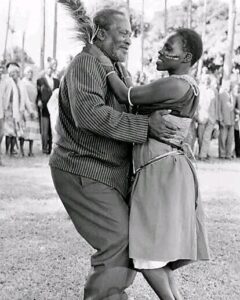
The historic image, reportedly taken on July 1, 1964, has attracted attention on social media, with its significance extending beyond the dance itself. It captures a relaxed moment involving one of the most influential figures in Kenya’s history at a time when the young nation was beginning to establish its identity on the world stage.
Unlike the formal portraits and official photographs commonly associated with Kenyatta, the image presents a different side of the first President. Dressed for a social occasion, he is seen enjoying a dance with a female companion, away from the demanding responsibilities that came with leading a newly independent country.
For many Kenyans, the photograph offers a refreshing departure from the familiar images of Kenyatta addressing public gatherings, meeting political leaders or appearing at official state functions.
A glimpse into Kenya’s early independence years
The date attached to the photograph makes it particularly significant. Kenya gained independence from British colonial rule on December 12, 1963, meaning the garden party took place less than seven months after the historic milestone.
At the time, the country was undergoing a major political and administrative transformation. Kenyatta and his government were tasked with steering Kenya through the complex transition from colonial administration to self-government while laying the foundations for the new nation.
Against this backdrop, the photograph captures a quieter moment in the life of a leader whose name had become closely associated with Kenya’s struggle for independence and the country’s emerging political identity.
Garden parties and other social gatherings also formed part of the diplomatic and social calendar of the period. Such occasions provided opportunities for government officials, diplomats and members of the emerging national elite to interact outside formal political settings.
Although the photograph offers only a brief glimpse into that world, it helps bring the atmosphere of the era into sharper focus.
Why the photograph is attracting attention
For younger generations who know Kenyatta primarily through history lessons, monuments, currency and archival footage, the resurfaced image offers a more personal perspective on the man who led Kenya during its formative years.
Historical photographs have a unique ability to connect the present with the past. Beyond recording important political events, they preserve everyday moments that reveal how prominent figures interacted with the world around them.
In this case, a simple dance at a garden party has become a window into Nairobi’s social life during the first months of independence.
The image also invites reflection on how much Kenya has changed over the decades. Nairobi has grown into a major regional business and diplomatic hub, while the country’s political institutions, social landscape and public culture have evolved considerably since the early 1960s.
Yet photographs such as this one preserve fragments of a period that might otherwise feel distant to those who did not experience it firsthand.
A moment from history preserved in a photograph
More than six decades later, the photograph continues to generate interest because it captures an informal moment involving a president whose legacy remains deeply embedded in Kenya’s national story.
While official portraits often present historical leaders in carefully arranged settings, candid images can offer a different perspective, revealing glimpses of their lives beyond the public stage.
The identity of the woman dancing with Kenyatta and the specific circumstances surrounding the garden party would require further historical documentation to establish conclusively.
Nevertheless, the photograph serves as a reminder that history is not made up solely of political speeches, major decisions and national celebrations. It is also preserved in ordinary moments that, with the passage of time, acquire extraordinary historical value.
For Kenyans looking back at the country’s early years of independence, this rare image offers a nostalgic reminder of a bygone era and a visual connection to one of the most consequential chapters in the nation’s history.