More than a decade after a shocking incident that stunned the nation, the man who struck veteran opposition leader and former Prime Minister Raila Odinga with a cane during a political rally has finally spoken out, expressing deep regret and sorrow over his actions
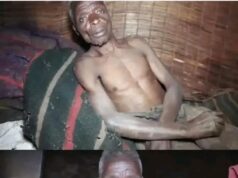
Lengo Karissa Mudzomba, now 65, says the memory of that day continues to haunt him. Speaking in an emotional interview, he revealed that one of his greatest regrets is that he never got the opportunity to personally apologise to Raila before his passing.
“Raila was a beacon of democracy. Kenya has lost a great leader,” Mudzomba said, his voice filled with remorse.
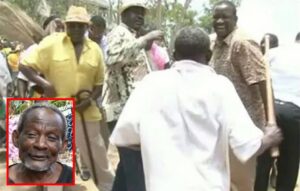
The dramatic incident occurred on September 29, 2014, during the high-profile Okoa Kenya rally in Kinango, Kwale County. Thousands had gathered to support the Coalition for Reforms and Democracy (CORD) campaign, which was pushing for a constitutional referendum.
As the rally reached its peak, Raila and then-Kwale Governor Salim Mvurya joined local dancers in a traditional coastal performance, delighting the crowd. But in a matter of seconds, the celebratory mood turned into chaos.
Without warning, Mudzomba emerged from the crowd and swung his walking stick, striking both leaders. The unexpected attack sent shockwaves through the gathering as security officers rushed in and quickly restrained him before any serious injuries could occur.
Images and videos of the incident spread rapidly across the country, making headlines and cementing the moment as one of the most memorable episodes in Kenya’s political history.
At the time, reports suggested that Mudzomba struggled with mental health challenges. In an extraordinary display of forgiveness, both Raila and Mvurya chose not to pursue the matter aggressively. The assault charges were eventually dropped, allowing Mudzomba to return home.
Now reflecting on the incident years later, Mudzomba says he was not in control of himself.
“You know, I have a problem that sometimes troubles my mind, and when it happens, I am no longer myself,” he explained.
Recalling the events of that day, he said he had simply attended the rally like everyone else after taking tea at home that morning. However, something suddenly changed.
“I felt an adrenaline rush. My fingers felt like they were on fire. I lifted my walking stick and caned them. At that moment, I didn’t see them as human beings,” he said.
Moments later, reality set in.
“I asked myself, ‘What have I just done?’ I couldn’t understand why I had disrupted the meeting.”
Mudzomba admitted that at the time he felt overwhelmed by thoughts he could not control.
“When the idea came into my mind that I should cane them, I was ready to kill or be killed. Later, I realised I had done something terribly wrong.”
As he reflected on Raila’s legacy, his regret became even more evident.
“I caned him, and now my uncle Raila is gone. It pains me deeply. I feel very bad about it, but what can I do? We are only human beings,” he said.
Despite their brief and controversial encounter, Mudzomba spoke warmly of Raila, describing him as a courageous leader who dedicated much of his life to fighting for democracy and political reforms in Kenya.
“Many people never understood the difficult decisions he made. He was a good man. Kenyans should remember him as one of the heroes of this generation.”
For many Kenyans, the Kinango cane incident remains an unforgettable moment. Yet Mudzomba’s latest remarks offer a rare glimpse into the mind of the man behind the act—a man who says he has spent years carrying the weight of a decision he wishes he could take back.