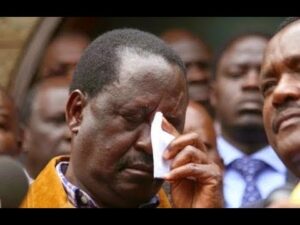
For decades, the story of how opposition leader Raila Odinga was allegedly tortured during detention after the failed 1982 coup attempt has remained one of the darkest chapters in Kenya’s political history. Among the most shocking details in his memoir is the account of police officers beating him with wooden sticks and broken pieces of furniture while trying to force a confession from him.
According to Raila’s autobiography The Flame of Freedom, the events began shortly after the attempted coup against President Daniel arap Moi’s government in August 1982. Raila, who was then a young engineer and political activist, was arrested by security officers and accused of being linked to the coup plotters.
He narrated that detectives subjected him to days of brutal interrogation at Special Branch offices and later at the General Service Unit (GSU) headquarters. During the interrogations, officers allegedly demanded that he confess and provide names of senior people believed to have supported the coup attempt. When he refused, the torture reportedly intensified.
One of the officers mentioned in accounts surrounding the torture was former Police Commissioner Ben Gethi. Raila claimed that Gethi personally came to interrogate him and ordered officers to assault detainees if they failed to cooperate. In one account, Raila stated that Gethi appeared drunk and encouraged officers to continue beating him using clubs and sticks.
Another officer frequently mentioned in the story is Senior Superintendent Josiah Kipkirui Rono. Raila alleged that Rono broke a wooden table and used splinters from it to hit him repeatedly during interrogations aimed at extracting a confession.
The torture, according to Raila, lasted for several days. He described being beaten on the head with wooden objects, denied proper food, and subjected to psychological abuse. Reports based on his memoir say he was later transferred to Kamiti Maximum Security Prison, where he continued serving years in detention without trial.
What made the story even more dramatic was what happened afterward to some of the officers involved. Ben Gethi, who was then among the most feared security chiefs in Kenya, was later dismissed from his powerful position as Police Commissioner. Reports indicate that he was detained for months after falling out with the Moi administration following the coup investigations.
Raila later claimed that Gethi became furious after reading statements that mentioned influential government figures, including then Attorney General Charles Njonjo. According to the memoir, Gethi allegedly tore up the statements in anger before ordering Raila to rewrite them.
The incident became symbolic of the harsh treatment many political detainees faced during the single-party era in Kenya. Human rights organizations later criticized the widespread detention, torture, and suppression of dissent that characterized the period.
Today, the story continues to spark debate among Kenyans. Supporters of Raila view it as evidence of the sacrifices he made during the struggle for democracy, while critics question parts of the narrative. Nevertheless, the account of a young Raila allegedly being beaten with wooden sticks inside police cells remains one of the most talked-about stories from Kenya’s turbulent political past.