For years, scientists have observed a fascinating but dramatic geological transformation taking place deep beneath the surface of Africa. According to geologists and researchers studying plate tectonics, the African continent is slowly tearing apart—a process that could eventually split it into two separate continents millions of years from now.
The Rift That Is Changing Africa’s Future
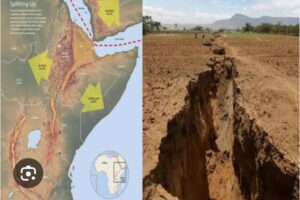
- The phenomenon is happening along the East African Rift System, one of the largest and most active rift zones on the planet. This massive crack stretches thousands of kilometers from Ethiopia through Kenya, Tanzania, Rwanda, Uganda, and down into Mozambique.
It is here that the African Plate is gradually splitting into two:
The Nubian Plate, which carries most of mainland Africa
The Somali Plate, which is slowly drifting eastward
Although the movement is extremely slow—only a few millimeters per year—the cumulative effect over millions of years could reshape the continent entirely.
A Visible Example: The Giant Crack in Kenya
In 2018, a giant crack appeared in the Mai Mahiu area of Kenya, capturing global attention. Scientists clarified that the crack did not appear overnight, but it highlighted the active geological processes happening beneath the East African Rift.
While such cracks do not mean Africa will split tomorrow, they are signs of a much larger, ongoing continental breakup.
What Will Happen Millions of Years From Now?the process continues as predicted, Africa could eventually separate into two large landmasses. A new ocean would form in the rift valley, filling the space between the two plates.
The region comprising Ethiopia, Somalia, Kenya, Tanzania and surrounding countries would drift eastward, forming a new continent.
This process is similar to how South America and Africa drifted apart millions of years ago.
Should Africans Worry?
Scientists emphasize that this is not a sudden disaster, nor is it something that will happen within our lifetimes. Continental drift is slow and spans millions of years.
For now, the only real impact is geological activity such as earthquakes, volcanic eruptions, and the formation of new landforms along the rift.
Why It Matters
This ongoing split offers researchers a rare opportunity to observe how continents break apart—a process that shaped today’s world. It helps scientists understand:
How oceans form
How tectonic plates move
How continents evolve over time
Africa’s geological transformation is therefore not a threat, but a powerful reminder that the Earth is constantly changing. Ooh