A Nairobi woman has sparked concern over meat safety after sharing a disturbing experience involving beef she allegedly purchased from a local butchery, claiming that the meat remained unusually red even after boiling and produced dark, almost black soup.
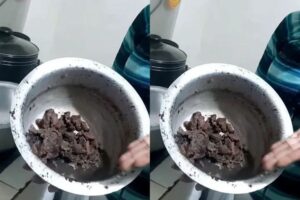
The woman, identified as Vivian Ganda, said she became suspicious of the meat while preparing a meal at home after noticing what she described as an unusual reaction during cooking. According to her, the meat failed to change colour as expected, while the soup turned black and the smell was different from what she was accustomed to when preparing fresh beef.
Her experience prompted her to question the quality of meat being sold to unsuspecting consumers in Nairobi, raising concerns about what Kenyans could be putting on their dinner tables.
In a video shared online, Ganda expressed her shock as she showed the meat and questioned why it was behaving differently from ordinary beef during boiling.
“Imagine napika nyama, inatoa soup black, nyama yenyewe ni red, alafu harufu yake pia si ile ya kawaida tumezoea ya nyama. Nyama gani inatoa soup ya black?” she posed.
She said the combination of the persistent red colour, dark soup and unfamiliar smell left her unsettled, prompting her to speak out and warn other consumers about the experience.
Ganda also called on Nairobi County official Geoffrey Mosiria to investigate the matter, questioning whether butcheries were obtaining meat from properly inspected slaughterhouses and whether some traders could be engaging in questionable practices.
“Mosiria enda utuangangalie kama wanachinja punda ama watu,” she said, expressing her fears over the source of the meat.
Her remarks have reignited public conversations about meat inspection, food hygiene and the safety of products sold in neighbourhood butcheries, where many households depend on affordable meat for their daily meals.
### Growing concerns over meat safety
The incident comes against the backdrop of longstanding concerns about food safety in informal markets, particularly regarding meat storage, transportation, handling and the possibility of chemical adulteration.
A 2024 study published in Frontiers in Sustainable Food Systems examined food safety concerns in informal markets in Kenya, including Nairobi and Machakos. The research documented concerns among consumers and traders regarding meat handling, storage conditions and suspected chemical adulteration.
Some consumers interviewed in the study expressed suspicions that certain traders could be using chemicals to alter the appearance of meat, particularly products that appeared unusually red. However, such concerns were reported perceptions and did not establish that the meat sold by any particular trader had been chemically treated.
Food experts have repeatedly cautioned that the appearance of meat alone cannot conclusively determine whether it is safe for consumption. Beef naturally contains myoglobin, a protein responsible for its red colour, while its appearance can change depending on oxygen exposure, lighting, storage and other factors.
Nevertheless, an unusual smell, slimy texture, improper storage or suspicious changes during preparation may warrant caution, particularly when consumers are unable to establish the source or handling conditions of the meat.
Ganda’s experience has once again raised questions about whether consumers can confidently trust meat sold at local butcheries and whether more stringent inspections are necessary to protect the public from potentially unsafe food products.
As concerns continue to circulate, consumers are being reminded to purchase meat from reputable outlets, ensure it is properly stored and avoid eating products that appear spoiled or have an unusual smell.
While Ganda’s claims have not been independently verified and the meat has not been scientifically tested, her experience has reignited an important conversation about food safety and the need for vigilance in the meat supply chain.