He was once celebrated as one of Kenya’s brightest academic minds, a young man whose extraordinary intelligence propelled him from a humble village in Homa Bay to the highest levels of scholarship, government and politics. Yet, despite his remarkable achievements, Professor Joseph Ouma Muga’s life would eventually take a painful turn, marked by political fallout, fading influence and reportedly difficult final years.
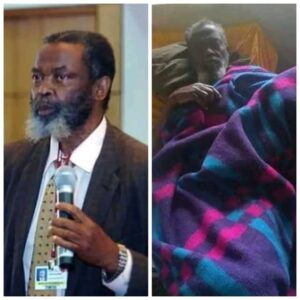
Born in Kochia village, Homa Bay County, Ouma Muga’s story was one of determination, brilliance and ambition. At a time when educational opportunities were limited for many Kenyans, he distinguished himself through exceptional academic performance, earning national recognition while still a student.
His name first became widely known at St. Mary’s School Yala, where he emerged as the top student in the country. His academic brilliance did not end there. In 1957, he reportedly repeated the remarkable feat in the Cambridge examinations, cementing his reputation as one of the most gifted students of his generation.
His impressive academic journey later took him to Makerere University, where he pursued higher education before proceeding to Australia for a master’s degree. He eventually earned a PhD in Geography, establishing himself as a respected scholar whose expertise extended into environmental science and research.
Over the years, Ouma Muga built a distinguished career in academia. He became one of the respected voices in environmental studies and played a role in establishing Moi University’s School of Environmental Studies, contributing to the growth of environmental education and research in Kenya.
However, his life took a dramatic turn when he ventured into politics, a decision that would bring him closer to power but also expose him to the turbulent realities of Kenya’s political landscape.
In 1989, Ouma Muga became the Member of Parliament for Rangwe and was subsequently appointed an Assistant Minister in the government of President Daniel arap Moi. His rise into government appeared to be another milestone in a life that had already been defined by remarkable achievements.
But his relationship with Moi reportedly deteriorated following an international conference on the ozone layer in Rio de Janeiro in 1989. According to accounts of the fallout, Ouma Muga was accused of claiming that he had written the President’s celebrated speech, a controversy that allegedly angered Moi and contributed to his political downfall.
The fallout reportedly cost him his government position, and his relationship with the ruling KANU party eventually unravelled. He later abandoned KANU and joined FORD-Kenya, returning to Parliament in 1992 after reclaiming the Rangwe seat. However, his political fortunes would not last, as he lost the seat in the 1997 elections.
From that point, the once-powerful politician gradually faded from the political spotlight. The man who had once commanded attention for his intellectual brilliance and political stature was no longer a prominent figure in the country’s public affairs.
On September 6, 2018, Professor Ouma Muga died at Kikuyu Hospital after battling a long illness. Reports surrounding his final years painted a picture of financial difficulties, a sobering contrast to the remarkable heights he had reached during his lifetime.
His story remains one of Kenya’s fascinating journeys of brilliance, ambition, politics and personal struggle. From a village in Homa Bay to the top of the academic world, from the corridors of government to the fading of political influence, Ouma Muga experienced both the triumphs and uncertainties of life.
His journey is a reminder that academic brilliance can open extraordinary doors, but political power can be unpredictable, and fame is never permanent. Behind the titles, achievements and public recognition lies the human reality that even the most accomplished individuals can face difficult seasons in their final years.
Professor Joseph Ouma Muga may have left the political stage quietly, but his remarkable academic journey remains a chapter worth remembering in Kenya’s history.