Ugandan President Yoweri Museveni has delivered a stern but humorous warning to his children over the future of his family’s Rwakitura estate, telling them not to subdivide the property into individual plots when he is no longer alive.
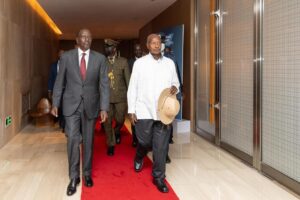

The veteran leader wants the family land to remain intact, with his children sharing the income generated from the estate rather than cutting it into smaller portions and claiming individual ownership.
Museveni made the remarks on Saturday, November 21, 2026, during a thanksgiving ceremony held in honour of Chief Justice Flavian Zeija in Rukungiri District, where he spoke about inheritance, family wealth and the importance of preserving property for future generations.
In a message that attracted attention, the Ugandan president explained that he had inherited land from his late father, Amos Kaguta, but had deliberately kept the property intact instead of dividing it into smaller pieces.
He now wants his children to follow the same tradition when he is gone, arguing that family wealth should be preserved rather than fragmented through inheritance disputes and individual claims.
Museveni suggested that his children could continue benefiting from the estate without necessarily owning separate portions of the land. Instead, they could collectively maintain the property and share the income generated from it.
The president appeared determined to ensure that the family estate remains a valuable asset for generations to come, rather than gradually losing its size and significance through subdivision.
However, it was his humorous warning that stole the spotlight during his address.
Museveni jokingly threatened that any child who ignored his wishes and proceeded to divide Rwakitura would face supernatural consequences after his death.
“Whoever splits up Rwakitura, my ghost will come back and haunt them,” Museveni joked, sending a clear message to his children about his expectations.
The president also argued that modern approaches to wealth management had made it possible for families to share inherited property and its benefits without physically dividing the land.
“The modern way has taught us you can share your parent’s properties without chopping them up,” he added.
His remarks have sparked an interesting conversation about inheritance, family wealth, land ownership and whether parents should have the final say in how their property is managed after their death.
In many African families, inherited land is often subdivided among children, sometimes leaving behind small, fragmented parcels that become difficult to develop, farm or manage commercially.
Museveni appears to favour a different approach — keeping the family estate intact while allowing all beneficiaries to enjoy its financial benefits.
His message raises an interesting question about the balance between preserving family wealth and allowing children the freedom to inherit and own property individually.
Would his children honour their father’s wishes and keep Rwakitura intact, or would the temptation to own individual portions eventually prevail?
For now, Museveni has made his position clear, and if his children ever decide to ignore it, they have already been warned about the ghostly consequences.
Whether his warning was purely humorous or a serious family instruction, Museveni seems determined to ensure that Rwakitura remains one estate long after he is gone.


