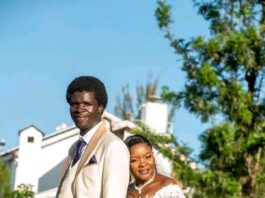
A cloud of sorrow has engulfed Lwandeti in Kakamega County after a heartbreaking family dispute turned what should have been a moment of unity into one of deep pain and controversy. Residents have been left emotional after Joseph was forced to conduct a funeral service at his home without the body of his beloved wife, Priscillah, a situation that has sparked widespread discussion across the country.


Joseph and Priscillah’s love story began in 2022 when the two met and eventually built a family together. Their union was blessed with two children, and those who knew them described them as a couple striving to create a happy home despite the challenges that often accompany young families. Priscillah worked as a teacher at Teremi Boys High School, where colleagues and students remember her as a dedicated educator committed to shaping the lives of young people.
Tragedy struck when Priscillah passed away recently, leaving behind her grieving husband, children, relatives, friends, and colleagues. Instead of the family coming together to mourn her peacefully, disagreements reportedly arose between Joseph and Priscillah’s relatives, creating a painful standoff over her final send-off.
According to reports, the disagreement resulted in Priscillah’s body being taken to her parents’ home in Sikhendu, Trans Nzoia County, where she was eventually laid to rest. Meanwhile, Joseph remained at his home in Lwandeti, where he held a separate funeral service without his wife’s body. The emotional ceremony reflected the pain of a husband who was unable to bid farewell to his partner in the way he had hoped.
Although Joseph has not publicly revealed the exact cause of the dispute, reports suggest that one of the issues at the center of the disagreement may have been unpaid bride price. The claims have ignited intense debate among Kenyans, with many questioning whether dowry-related disagreements should determine where a married woman is buried after her death.
The incident has also revived discussions about whether bride price should be viewed as a symbolic cultural practice rather than a condition that affects a marriage or burial arrangements. Others have argued that many families today pay dowry in installments and that such matters should not overshadow the dignity of a deceased person or deepen the suffering of those left behind.
As the debate continues, the greatest victims remain the two young children who have lost their mother and now face life amid a painful family conflict. Many Kenyans have expressed hope that both families will eventually find reconciliation and healing despite the difficult circumstances surrounding Priscillah’s burial.
The tragic events serve as a reminder of the importance of dialogue and unity during moments of grief. At a time when families need each other the most, unresolved disagreements can leave emotional wounds that last for years.
May Priscillah rest in eternal peace, and may Joseph, their children, and both families find strength, comfort, and healing as they navigate this painful chapter of their lives.