Detectives from the Directorate of Criminal Investigations (DCI) have arrested a man accused of masquerading as a Kenya Defence Forces (KDF) officer and allegedly conning desperate families out of KSh1.1 million by promising to secure their relatives lucrative military recruitment opportunities.
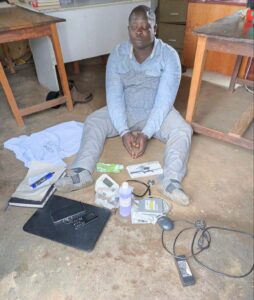
The suspect, identified as Brian Shem Maboni Achieng, was arrested in Nambale, Busia County, following investigations into a suspected recruitment scam that reportedly targeted families eager to see their loved ones join the disciplined forces.
According to details surrounding the arrest, the suspect allegedly took advantage of the high demand for employment opportunities in the military to convince unsuspecting families that he had the connections and authority to secure recruitment slots for their relatives.
His arrest reportedly brought to an end a scheme in which he allegedly collected substantial amounts of money from families who believed they were dealing with a genuine military officer capable of influencing the recruitment process.
The dramatic arrest took place at a guesthouse in Nambale, where detectives reportedly cornered the suspect while he was allegedly carrying out another stage of his fraudulent activities.
At the time of his arrest, Achieng had reportedly collected blood and urine samples from a young woman, claiming that he was conducting a Kenya Defence Forces medical examination as part of the recruitment process.
The development raised further questions about the lengths to which the suspect allegedly went to make his scheme appear genuine. By pretending to conduct medical examinations, he reportedly created the impression that the young woman was progressing through legitimate military recruitment procedures.
For families desperate to secure employment for their children, such actions could easily have appeared convincing, particularly given the prestige associated with serving in the Kenya Defence Forces.
The alleged KSh1.1 million scam also highlights the vulnerability of job seekers and their relatives to individuals who exploit unemployment and the desire for better economic opportunities.
Military recruitment exercises attract considerable interest from young Kenyans, many of whom view joining the KDF as an opportunity to build stable careers, serve their country and improve their families’ financial circumstances.
However, fraudsters have increasingly been accused of exploiting this enthusiasm by pretending to have influential contacts within recruitment institutions and demanding money in exchange for promised positions.
The arrest of Achieng serves as another reminder that Kenyans should remain cautious when dealing with individuals claiming they can guarantee employment in government institutions through unofficial arrangements.
KDF recruitment is conducted through official procedures, and applicants should avoid paying brokers or intermediaries who promise to manipulate the process in their favour.
The suspect is expected to face the necessary legal procedures as investigations continue into the alleged fraud and the full extent of the scheme.
Authorities are also expected to establish whether other individuals may have been involved and identify families who could have lost money through the alleged recruitment scam.
For the affected families, the incident is a painful reminder that the desperation to secure employment can make even seemingly convincing promises dangerous when placed in the wrong hands.