






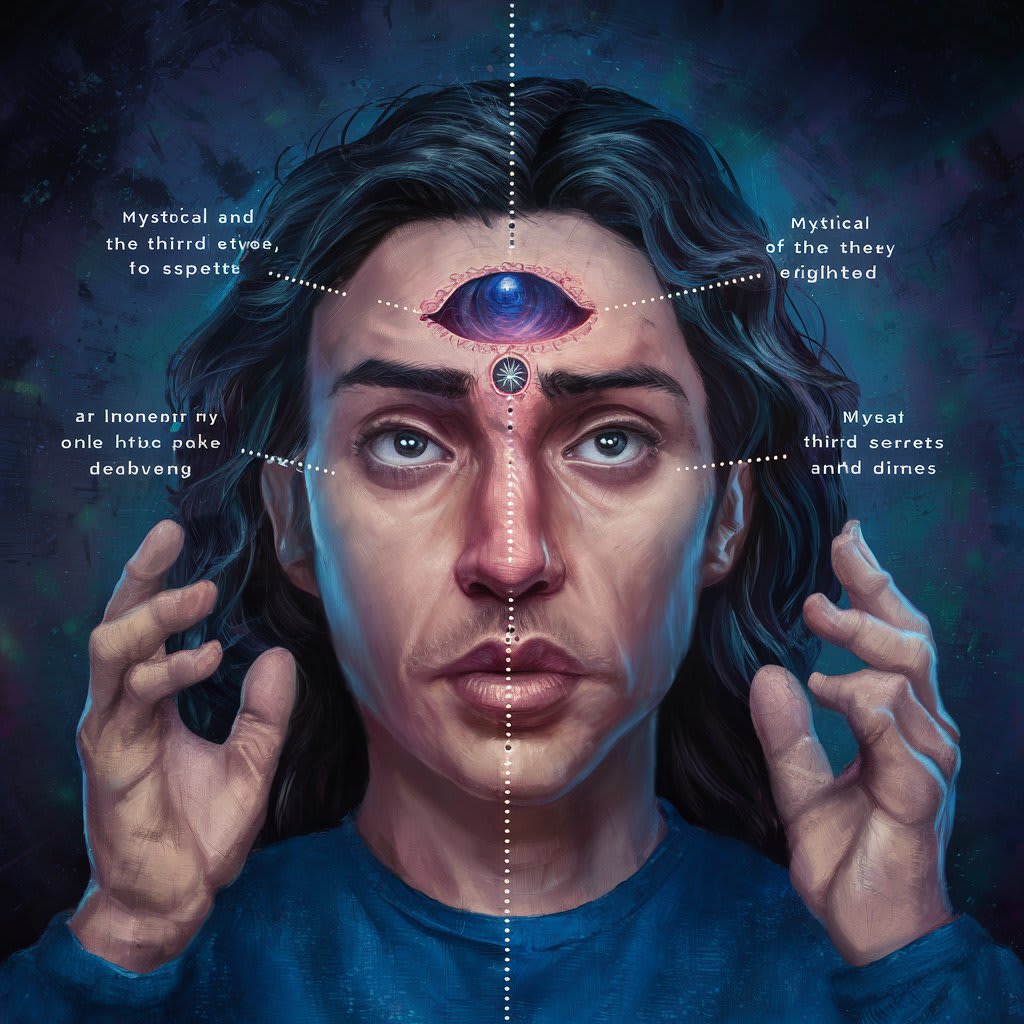
The idea of a “third eye” in humans has fascinated people for centuries, appearing in ancient spiritual traditions, myths, and popular culture. Recently, scientific discussions about a structure deep inside the human brain have renewed interest in the concept, leading many to wonder whether humans truly possess a third eye.
In reality, scientists have not discovered a new physical eye growing on humans. Instead, researchers have long studied a small gland known as the pineal gland, which is often referred to as the “third eye” because of its unique characteristics and evolutionary history.
René Descartes famously described the pineal gland as the “seat of the soul” centuries ago. Located near the center of the brain, the gland produces melatonin, a hormone that helps regulate sleep and wake cycles.
What makes the pineal gland particularly interesting is that it shares some similarities with light-sensitive organs found in certain reptiles, amphibians, and fish. Some animals possess a structure called the parietal eye, sometimes known as a third eye, which can detect changes in light and darkness. Scientists believe that the human pineal gland and these light-sensitive organs may have evolved from related structures in ancient vertebrates.
Researchers have found that the pineal gland contains cells with biological features that resemble those involved in light detection. However, unlike a true eye, it cannot form images or allow humans to see. Instead, it helps the body respond to daily light-dark cycles by influencing hormone production and circadian rhythms.
Recent studies in evolutionary biology and neuroscience have continued to explore how ancient sensory structures developed over millions of years. These findings have contributed to headlines suggesting that humans have a “third eye,” although scientists emphasize that the pineal gland is not an actual eye in the traditional sense.
The fascination with the pineal gland extends beyond science. In many spiritual traditions, the third eye is associated with intuition, awareness, and higher consciousness. While these beliefs remain matters of faith and philosophy, scientific research focuses on the gland’s biological functions, particularly its role in sleep regulation and hormonal balance.
Experts note that maintaining healthy sleep habits, getting adequate exposure to natural daylight, and following consistent sleep schedules can help support proper pineal gland function. Since the gland is responsible for melatonin production, disruptions to normal light exposure—such as excessive screen time before bed—can interfere with the body’s internal clock.
Interesting Facts About the Pineal Gland
- It is located near the center of the brain.
- It produces melatonin, which regulates sleep patterns.
- It is often called the “third eye” due to its evolutionary connection to light-sensitive organs.
- Some reptiles still possess a functional parietal eye on top of their heads.
- The gland has been studied by scientists, philosophers, and spiritual thinkers for centuries.
Social Media Reactions
- James K.: “I thought scientists had found a new eye! The pineal gland story is still fascinating.”
- Mercy W.: “Nature never stops surprising us. Evolution is incredible.”
- Brian O.: “Now I understand why people call it the third eye.”
- Faith N.: “The connection between sleep and this gland is really interesting.”
- David M.: “Science headlines can be dramatic, but the real explanation is even more amazing.”
While humans do not have a fully functional third eye capable of seeing the world, the pineal gland remains one of the most intriguing structures in the body, offering clues about our evolutionary past and playing a vital role in regulating our daily biological rhythms.