Twenty-five former Kenya Defence Forces (KDF) soldiers have finally secured their freedom after the High Court overturned convictions that had seen them sentenced to life imprisonment for allegedly deserting duty.
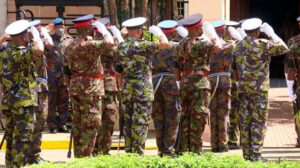

The former Kenya Navy officers had been at the centre of a lengthy legal battle dating back to 2014, following their conviction by a Court Martial sitting at the Mtongwe Naval Base in Mombasa.
The military court found them guilty of desertion and imposed life sentences, setting in motion years of legal challenges as the former soldiers fought to overturn the convictions.
Their long-running battle has now come to an end after the High Court quashed both the convictions and the sentences, finding significant legal and procedural shortcomings in the manner in which the case had been handled.
In its determination, the court raised questions about the legal authority under which the former servicemen had been prosecuted and whether the correct legislation had been applied to offences allegedly committed in 2007 and 2008.
One of the central issues involved the 90-day period used to establish desertion.
The High Court observed that the relevant 90-day periods had already elapsed under the former Armed Forces Act before the Kenya Defence Forces Act came into force in 2012. This raised questions about the legal basis for prosecuting the former soldiers under the newer law.
The court also found that the prosecution had not provided sufficient evidence to demonstrate that the former soldiers were on active service or had been placed under orders for active service at the time the alleged offences occurred.
That finding proved significant because the circumstances surrounding a serviceman’s status and orders at the time of an alleged offence can determine which military provisions apply.
The judges also took issue with the extraordinary passage of time between the alleged desertion and the eventual arrests of the former soldiers.
According to the court, the prolonged delay created serious concerns regarding their constitutional right to a fair trial. The former servicemen were required to defend themselves against allegations dating back several years, potentially making it difficult for them to locate witnesses, retrieve records or effectively reconstruct events surrounding the accusations.
The High Court further found shortcomings in the military proceedings, particularly regarding whether crucial evidence and the soldiers’ respective defences had been properly considered before the convictions were entered.
With the convictions and life sentences now quashed, the former soldiers have won a major legal victory after years of uncertainty.
The ruling brings to a close a case that began with allegations of desertion more than a decade ago and culminated in life imprisonment before being subjected to scrutiny by the High Court.
For the 25 former officers, the decision represents more than the overturning of a conviction—it marks the end of a prolonged legal struggle that had followed them for years.
The judgment also highlights the importance of strict adherence to constitutional protections, correct application of military law and timely prosecution, particularly in cases where an accused person faces the most severe consequences.